GRACE UNDER PRESSURE
  • Blog
  • About
  • Act Now
  • Updates
  • THESIS
  • Contact
  • TJL

​​

​BLOG BY GRACE C. YOUNG                                                                              


Above and Below the Waves in Malta

11/13/2014

Comments

 
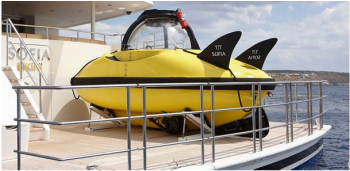
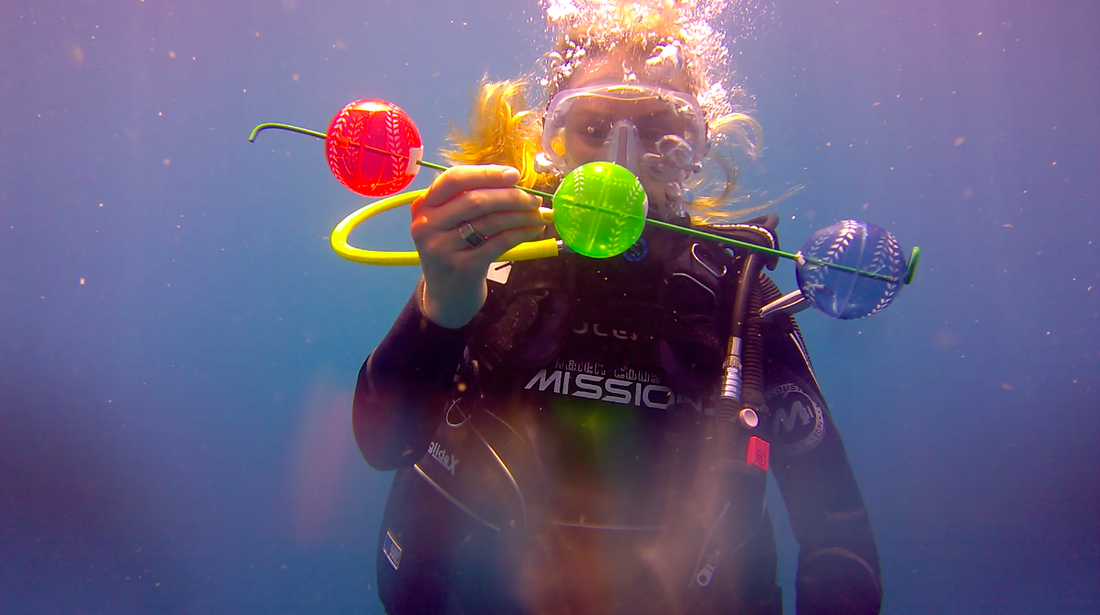
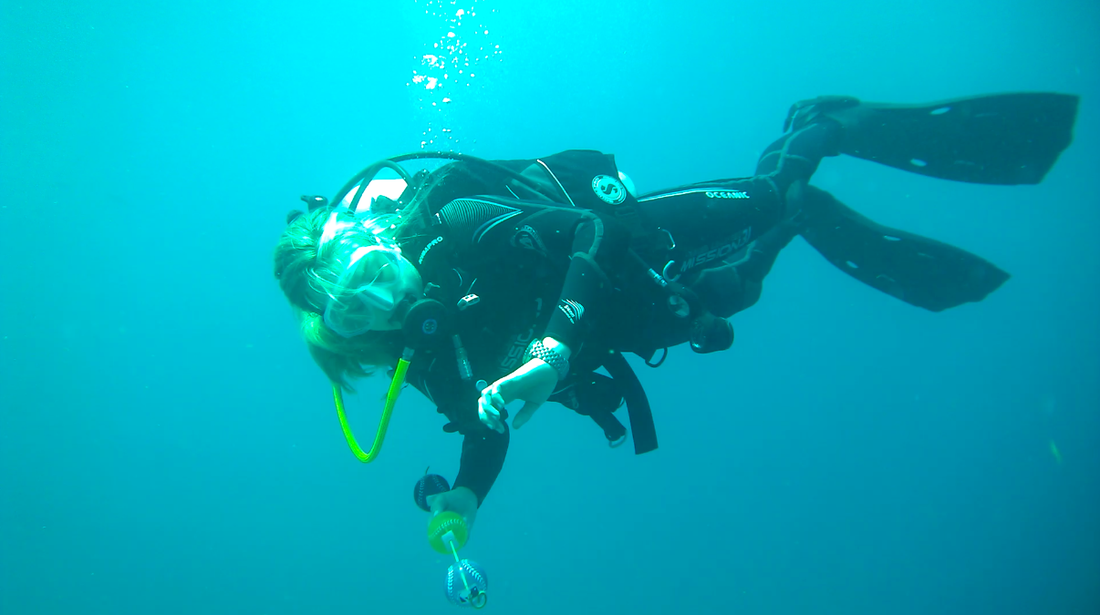
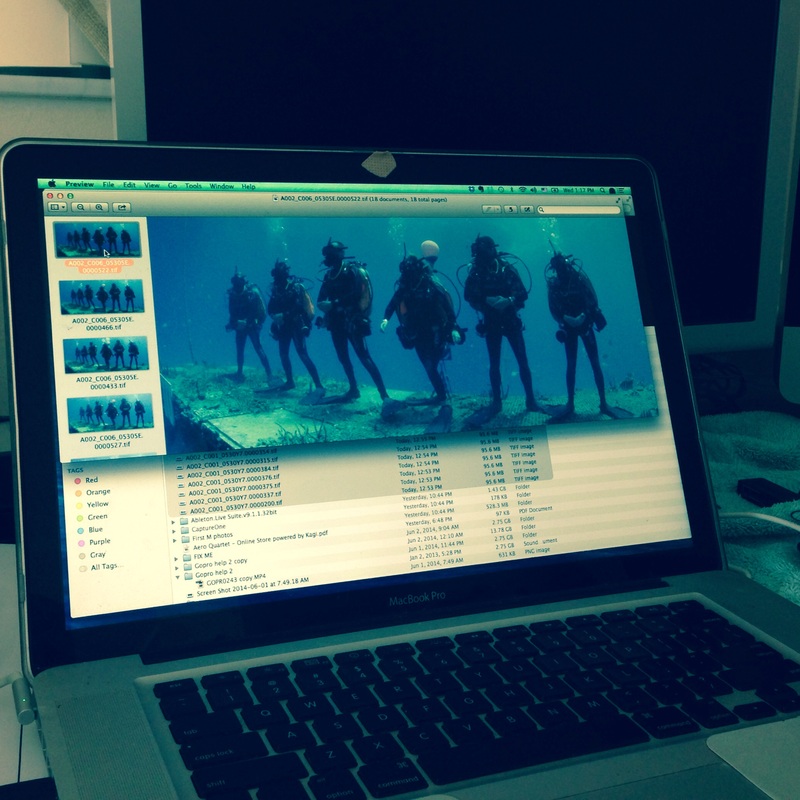
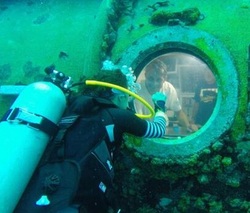
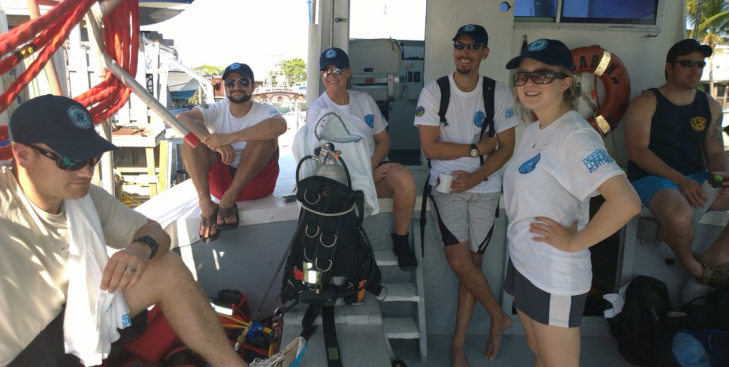
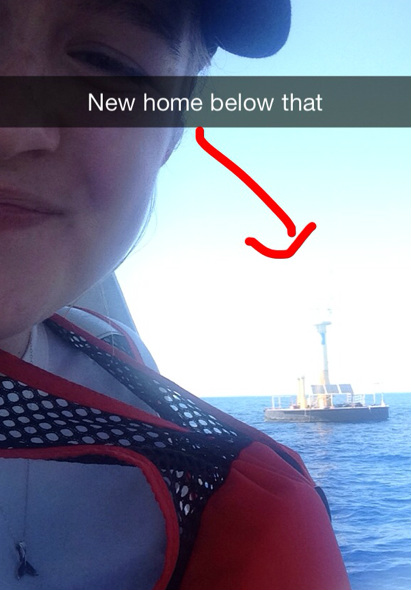
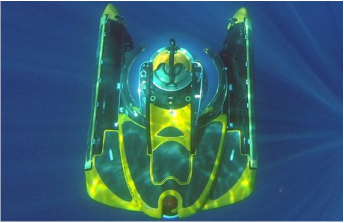
This Monday I had the good fortune to get a last minute ticket to Malta to join Mission 31 dive master Billy Snook on an epic adventure with U-Boat Worx. The company makes ultra-luxurious personal submarines. Billy and I will be SCUBA diving alongside the submarines making a marketing video for the company. It's fun diving with someone you've spent a lot of time in the water with because you know how to communicate with each other. It's also great to be back the water! My last dive since Mission 31 was with Boston in friend Max Jamilly, who's currently a dive instructor in Indonesia. 
Check out this storybook from the first two days of the trip, "In Malta on a Submarine":
https://steller.co/stories/382560750733887168

And from the rest of the trip, 

"Above and Below the Waves in Malta"
https://steller.co/stories/391163227385366233

Picture
Their subs are designed to be launched off private yachts. Credit Dick Holthuis.
Picture
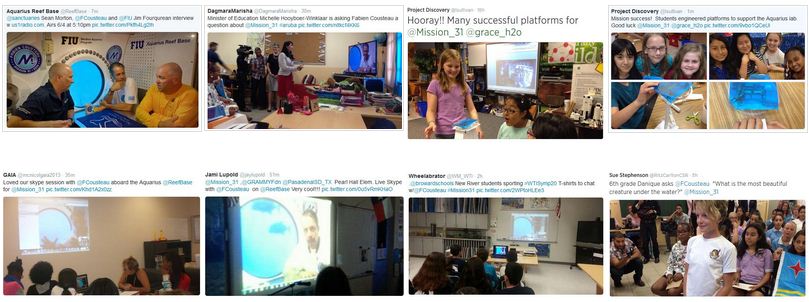
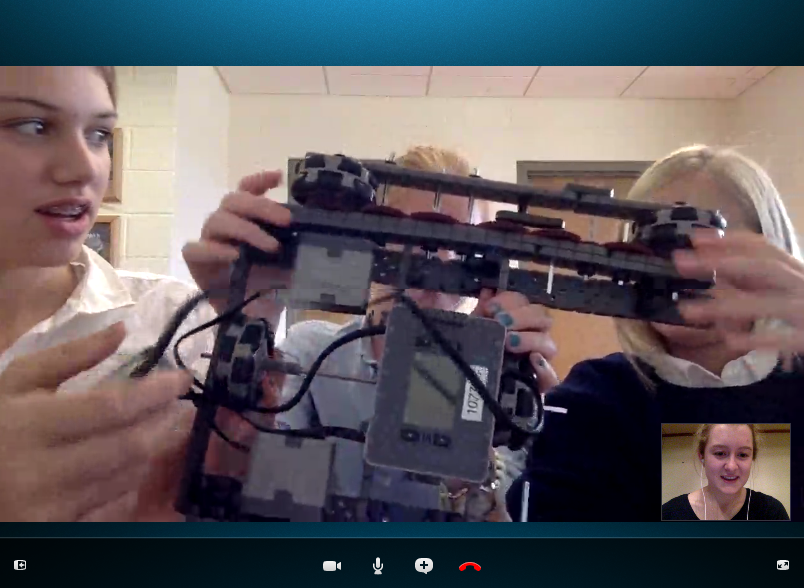
While onboard the ship here in Malta I got to virtually meet an all-girls robotics team (the "Gear Gals") back at my high school. These girls have got it going on! Check out their website.
Picture
Picture
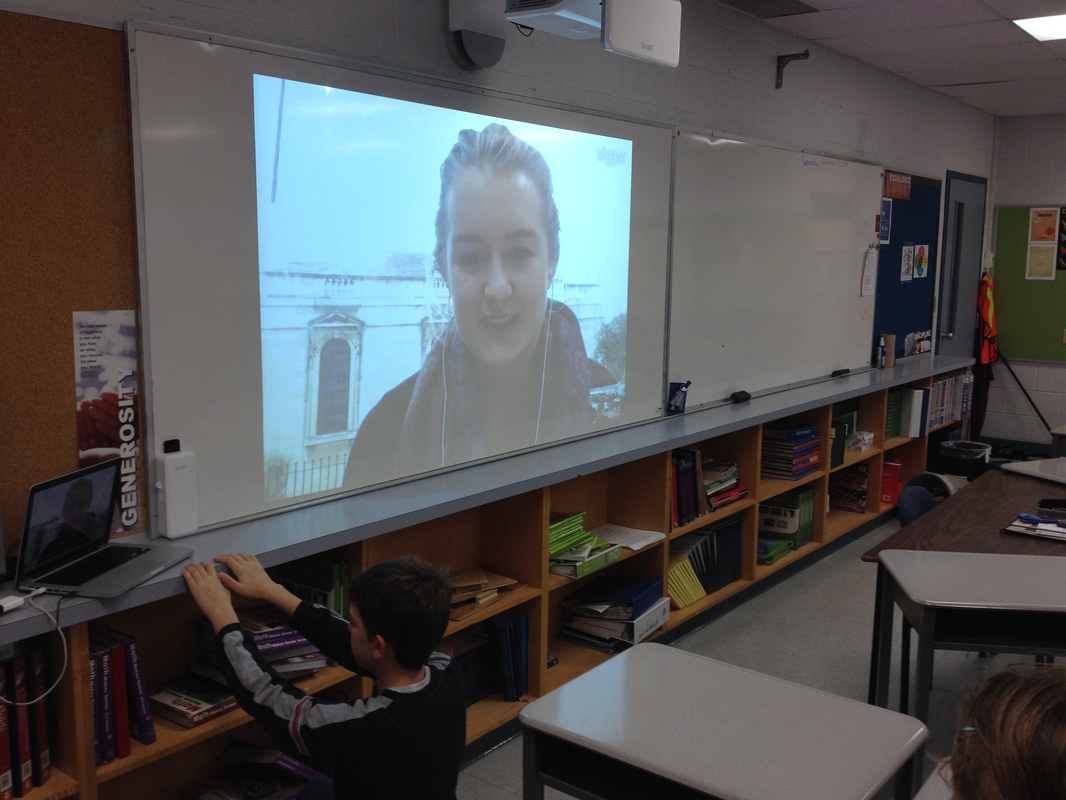
Last week I had the pleasure of connecting with Joe Grabowski's 8th Grade Science & Technology class in Canada. You can read more about our chat on their blog.
Picture
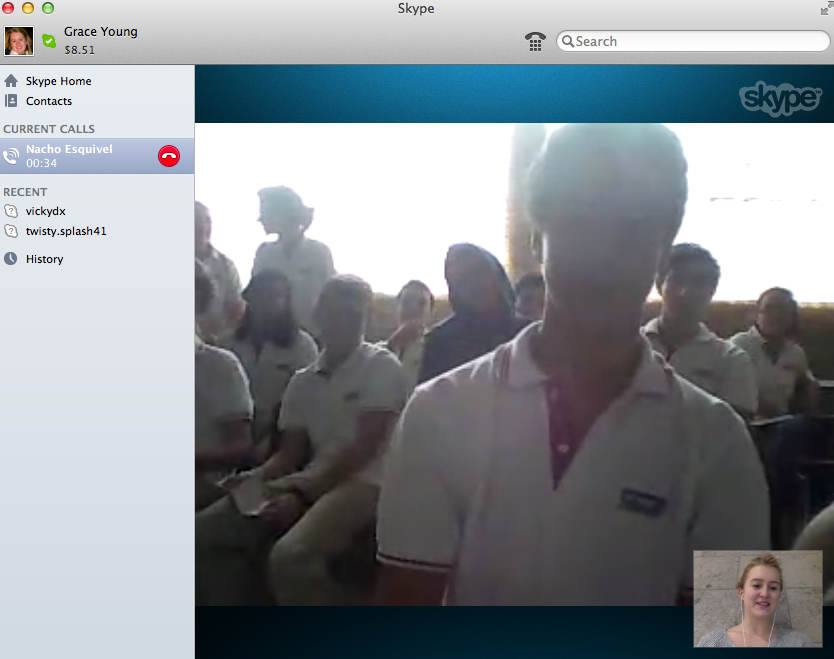
Earlier this month students in Costa Rica asked about living underwater and becoming ocean engineers. They've an incredible ocean-awareness curriculum spearheaded by their teacher, Nacho Esquivel. More info. 
Picture
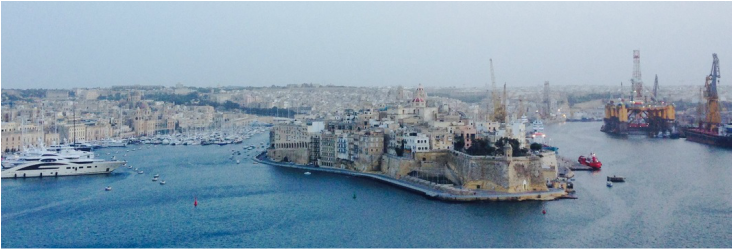
View of Port Of Valletta, Malta :) Took this picture with my iPhone (!)

Outreach  

#MITAlum twitter chat coming up 

Next Tuesday (November 18) at noon EST follow and Tweet to the hashtag #MITAlum to join a Twitter chat with me and fellow MIT alum and Mission 31 coordinator Saul Rosser.

Picture
The last Twitter chat with #MITAlum was about space exploration. Read more about it here. 

UPDATE:  You can view a summary of the chat at http://oceans.mit.edu/featured-stories/aquanaut-grace-young-lived-undersea-15-days-cousteaus-mission-31-live-qa! 

Got 12 MINUTeS? Watch steve's Inspiring talk

One of the graduate students who worked in Neri Oxman's lab with me last spring stayed awake while doctors removed a baseball-sized tumor from his brain. He's an absolutely incredible human being, to say the least. He shared his story in the talk at right. It's well worth watching. 
Comments

The Robots I Build: Thank you Fusion TV!

9/26/2014

 
Thank you Fusion for the nice profile! In the video I share (in 1 minute!) why the ocean is important and my goal to explore and more sustainably manage the ocean using marine robotics. 
Check out other videos in their "genius" (flatteringly named) series too: 

AN ART EXHIBIT OF UNDERSEA LIFE: KICKSTARTER

9/13/2014

 
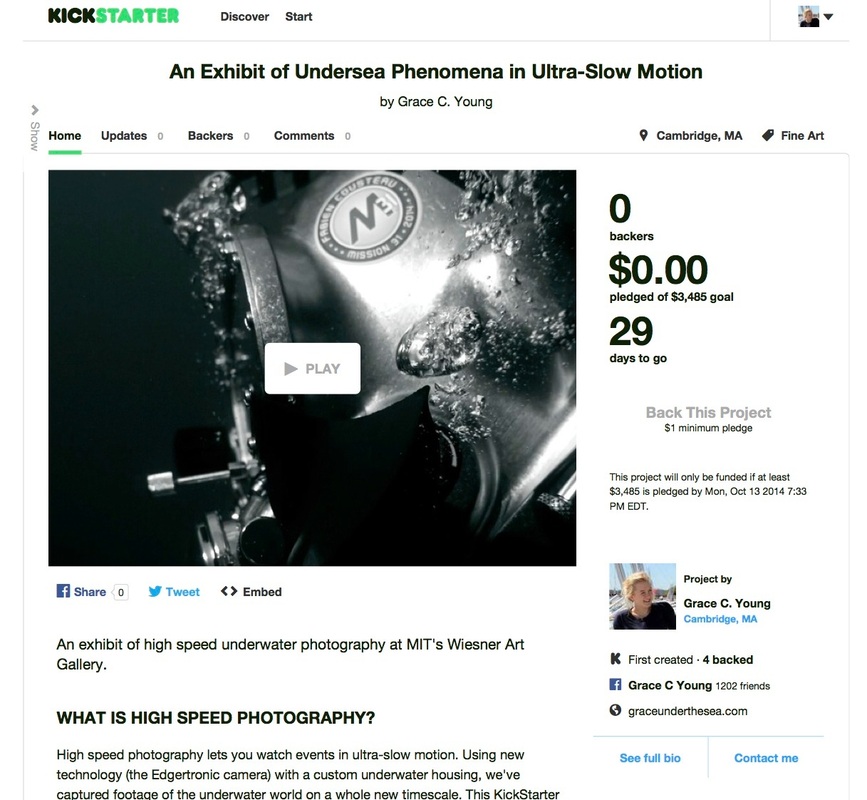
I just launched a KickStarter campaign to help fund an exhibit of underwater high speed photography from Mission 31 and continued work. It'll be at the MIT Wiesner Art Gallery all of January if the campaign is successfully funded! 

Check it out (link here), and please consider attending the exhibit! 

Picture

ALS NOMINATION -- THANKS!

9/10/2014

 
Thanks to Holt McCallany (who was nominated by Fabien Cousteau!) for nominating me for the ALS ice bucket challenge. I've donated and poured ice on my head... 
Thanks to my sister Isabel and our friend Abir for their assistance! 
And in case you've forgotten what this is all about, watch this short film by ESPN.

CHECK OUT OUR NATIONAL GEOGRAPHIC INTERVIEW

6/26/2014

 
Fabien, Liz and my interview with National Geographic is now online at: 
Picture
http://news.nationalgeographic.com/news/2014/06/140624-fabien-cousteau-aquanauts-aquarius-mission-31-ocean/ 


P.S Also check out the article on fellow Intel/CERN alum Taylor Wilson at the end of the NatGeo Mission 31 article. Keep up the great work Taylor!
"I find it incredibly frightening that we have the technology to completely destroy the ocean in my lifetime." -- Grace Young

AQUARIUS DAY 3: MET AN ASTRONAUT, UNDERSEA!

6/18/2014

 
Picture

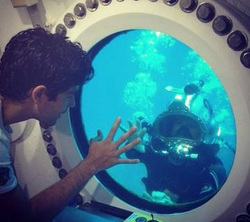
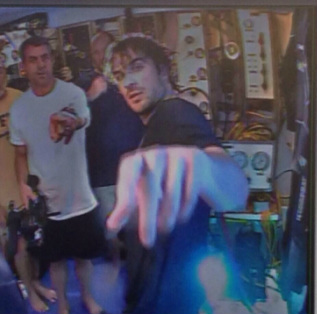
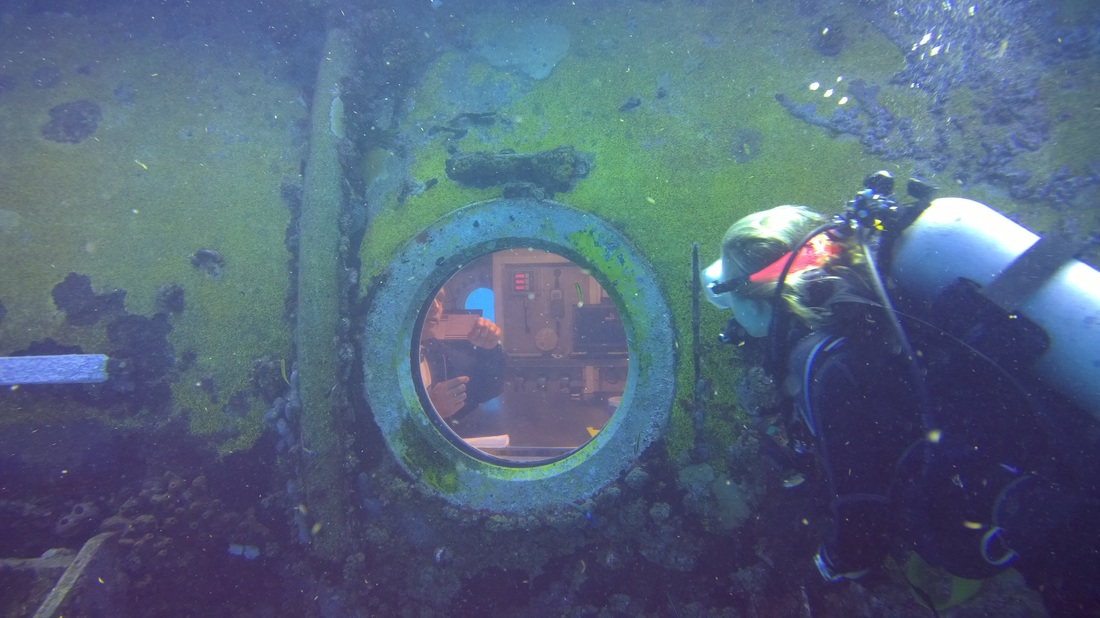
​Aquaman actor Adrian Grenier waved hi to me  through the viewport yesterday. 

Day 3 already! Oh man. Time is flying by. Even Fabien thinks so. As of today, he, Otter and Ryan have been here 19 days, making it one day longer than the longest previous stay in Aquarius. Just incredible. 

6:00 AM

When I rolled out of bed, every one was already up and at'um, eating breakfast, chatting, and prepping gear for the day. I started pulling on my wetsuit at about 6:30am, meanwhile reviewing with Liz our plan for the dive. 

7:00 AM

Liz and I started our dive. Before every dive we spend about 10 minutes going over a checklist with Otter, who reads the checklist, and Ryan, who helps us put the Kirby Morgan dive helmet on. (My dive helmet post with Lady Gaga is here.) In going over the checklist, we check the functionality of various valves and emergency back-ups on the helmet. Every time everything works, as far as I know. The checklist can seem tedious, but I realize how important it is. I started thinking back to Atul Gawande's book The Checklist Manifesto:  How to Get Things Right. I remember hearing that the medical profession, which suffers from human error, should really use checklists, but doctors just don't. I see why. They're annoying. And everything seems to work. But then again, the checklist seems like the only way to ensure all is as it's suppose to be. Not only do we catch anything not functioning, but routinely checking all the valves, etc. puts our mind at ease. I never have that feeling of, "Am I forgetting something...." I just focus on my dive, and I feel like the master of my equipment. 

This morning of our dive we collected samples in jars from the plankton traps (described in this previous post), and then stored the jars in a mesh bag that Northeastern divers will pick up in the afternoon. We also adjusted a tripod around a giant barrel sponge. The tripod suspends a sensor above the sponge, and the sensors measures the sponge metabolism. 

9:00 AM

We returned to Aquarius from our first dive. I ate a late breakfast and change both the the lens and set-up on the Edgertronic camera in case we have extra time to use it on our afternoon dive. 
Picture
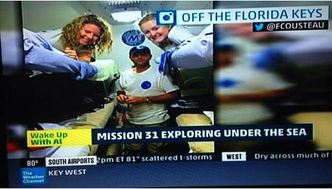
Good morning from The Weather Channel.
Picture
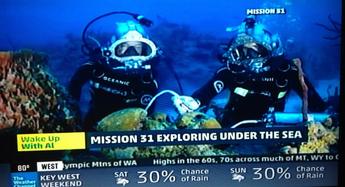
Exploring under the sea.

Met an astronaut, in the water!

On our second dive of the day, from noon to 3pm, we greeted astronaut Clay Anderson in the water. It was unreal. Fabien, Liz and I all shook his hand as he stepped onto the "porch" of Aquarius. We then gave him a tour around the house. A video of his visit is here. There's an interesting New York Times' article about the space and sea: Cosmic Connections in the Deep Sea. Living undersea, I have a new appreciation for our planet as a whole. Both astronauts and aquanauts are willing to live in an alien environment to explore the unknown, which links our cosmic work, whether it be in space or ocean. We are still looking for life in outer space, but there's so much undersea. 

During our afternoon dive, Liz and I also used a plankton tow to collect more plankton samples. You can read more about the research we are doing with the Northeastern topside team at their blog, specifically Amanda's post about zooplankton. 
Picture
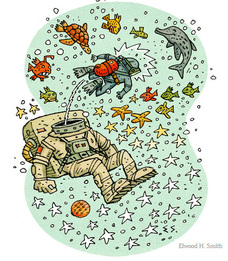
Exploring the unknown cosmos links space and ocean scientists. Credit NYT, Elwood H. Smith

Astronauts and Aquanauts on Jacques B'Day

Space and ocean and space explorers alike remembered Jacques Cousteau, the great explorer, on his birthday this month. See my post Happy Birthday  Jacques Cousteau! for details of the celebration.
Picture
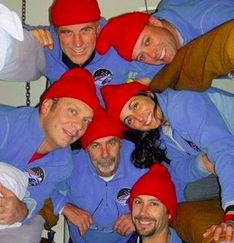
Mission 31 Aquanauts on Jacques Cousteau's birthday 2014. It seems aquanuts & astronauts share a common desire to explore the unknown.
Picture
NASA_ NEEMO9 Astronauts also celebrating on Jacques Cousteau's birthday 2014.

OUTREACH, Great Questions

Picture
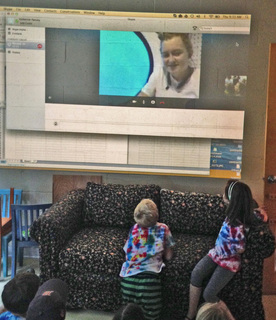
Skyping with classrooms ... the students have great questions. Credit Elizabeth ten Grotenhuis. 

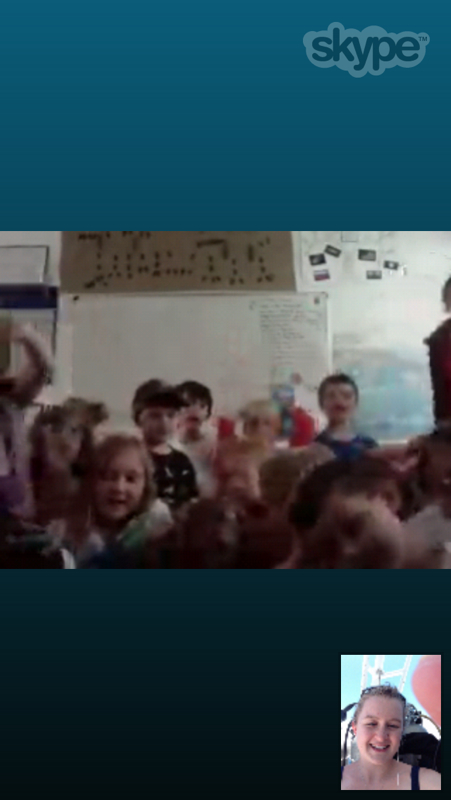
In between research dives, we are Skyping with different groups around the world, spreading the word about how exciting and important the oceans are. Yesterday, I Skyped with the AAT Project and the Birches School (read about my fall visit there) and from the research boat last week. Birches' kindergarten through third grade students asked:
  • What did you eat for breakfast? 
  • What fish have you seen? 
  • What surprised you? 
  • Do you miss your family? (Of course!) 
  • Is it cool?? (Yes!!) 
  • Grace, our chickens hatched and we are raising tadpoles! (Awww...)
There are more great adorable questions from this group in the fall.

It's BIZARRE... 

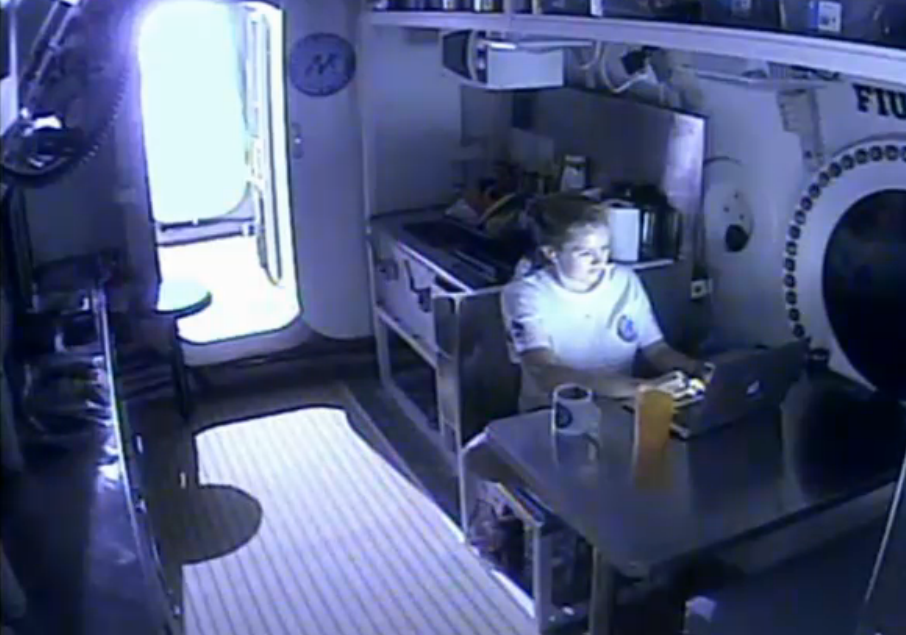
To be able to see myself working, on the Mission 31 Live Cam. 
Picture
E.g., this is me the first night here, staying up late. At MIT Commencement, President Reif said, “MIT gradutes are naturally nocturnal, especially when chasing a fresh idea.” I guess it's true.  

More Grace Under Pressure blog at Aquarius Day 4: Science and Ballet Art Undersea. 

WHAT'S MISSION 31? THIS IS WORTH THE WATCH

6/18/2014

 
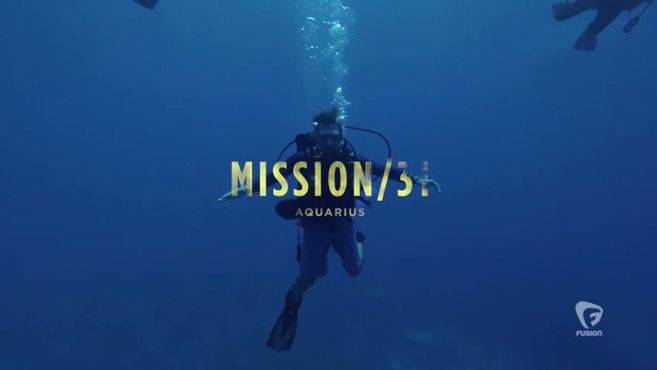
What is historic Mission 31 (and why is it so special?) This great video from Fusion explains the story very well: "Living underwater gives ocean explorers an incredible advantage. Unlike normal surface diving, where a person can only stay underwater a few hours a day, Mission 31 aquanauts can be under the surface for 12 hours or more. This is because their bodies are saturated with nitrogen, allowing them to live at the same pressure as the water that surrounds them." 
"To put it in perspective, it would take a normal diver six months to collect the amount of data that the aquanauts can obtain in 31 days."
"To say the least, Mission 31 is  ... cool." 
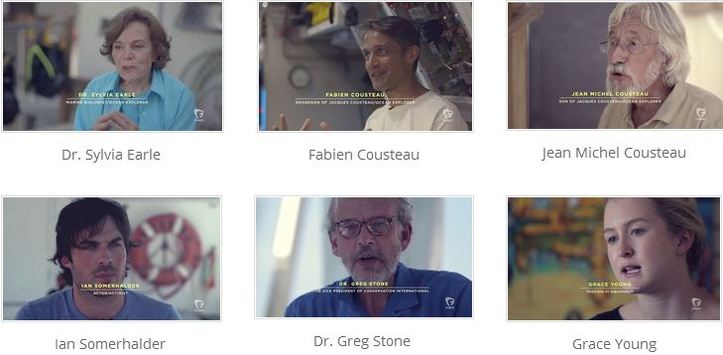
The cast of characters includes ... yours truly, Grace under no pressure :)
Picture
"This is a story about saving our waters, our oceans, our seas."
Picture
We Visited Jacques Cousteau's Grandson at the Bottom of the Ocean, article and video from This is Fusion.
Another great Mission 31 video is Splashdown: Aquanauts Switch Mid-Mission when when Liz, Matt and I splashed down to Aquarius.

ADVENTURES IN THE MANGROVES

6/14/2014

 
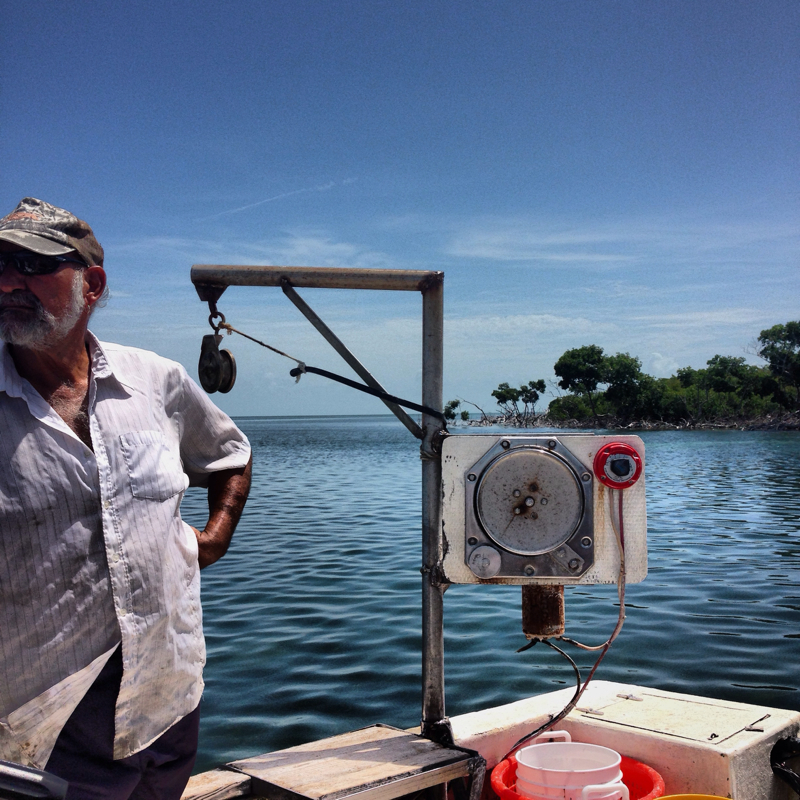
Yesterday I ventured with Matt and Brian to the Content Keys, where we met with two guides who took us on an adventure through the Florida mangroves. Mangroves are trees that grow partially submerged in the ocean. It felt like we were filming a Discovery Channel special (like this one on mangroves). 

We were there because we wanted to learn more about the grouper from an expert, our guide Don, who formerly hunted the fish but now tries to protect them. Matt and I will attempt to film the grouper's unique feeding strike during our saturation on Mission 31. 

Mangroves are amazing plants. They thrive in the salt water either by filtering out the salt at their roots or secreting excess salt through their leaves. They form forests in the middle of the ocean that harbor juvenile fish, filter water, and serve as attachment points for other water-filtering marine organisms. In addition, animals, such as pelicans and other costal birds, find shelter in the branches. There are even stories of monkeys living in the Florida mangroves! 

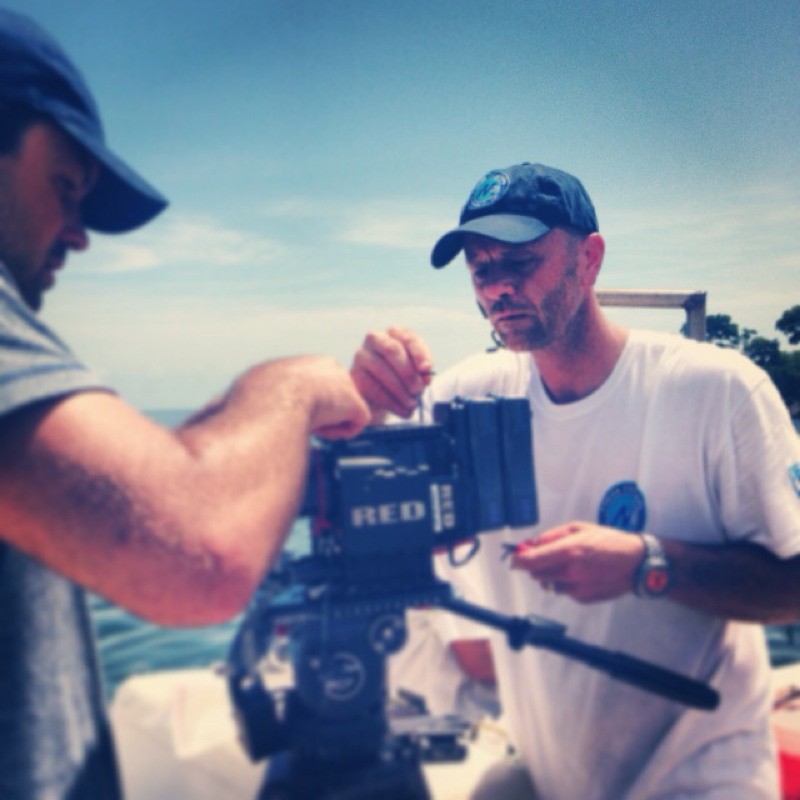
We snorkeled in the mangroves for several hours. Swimming under their branches, it was an alien world, like a scene from Avatar. We saw grouper, many snapper, some horse shoe crabs, and tiny crabs. The sounds were like nothing I've heard before. I could hear branches creaking and snapping, the rush of the current, and some popping noises from fish. Matt and Brian used the fancy RED camera to film the experience in incredible quality. The RED camera has more than 5 times the number of pixels of the very best HD camera. You'll have to wait to see their footage -- it'll be worth the wait! 
Picture
Intrepid M31 photographers Brian and Matt setting up the RED camera. Their footage will come out later; it's worth the wait! Samantha, our German shepherd mascot, retweeted this photo :) 
Picture
Our captain Mike knew the mangroves like the back of his hand. this was a good thing! The mangroves were like a thorny maze.
Picture
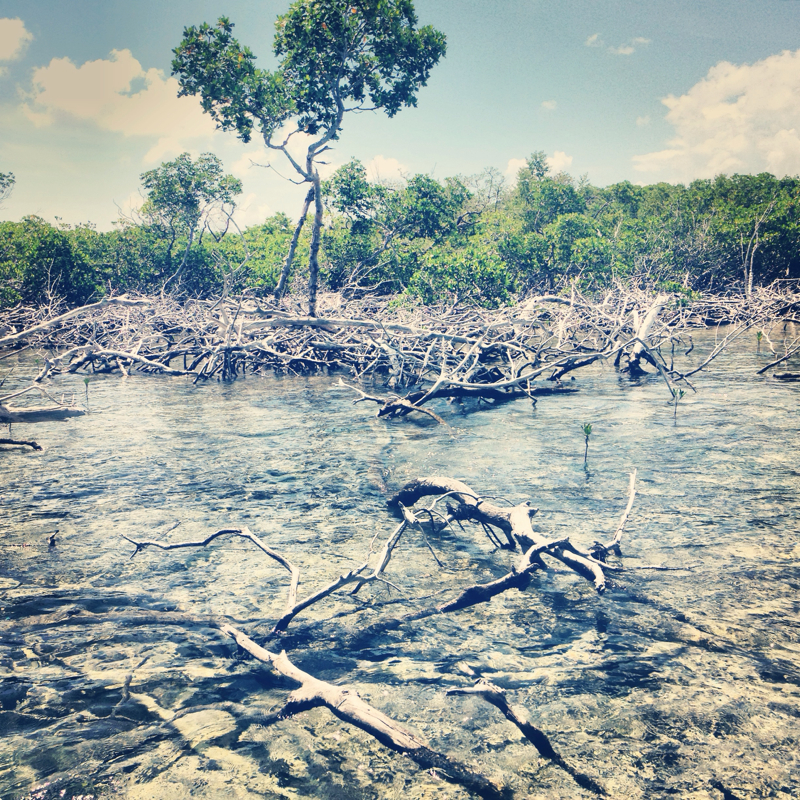
Eerie!! The entrance to the mangroves is mostly bare and dying trees, weathered by hurricanes. 
Picture
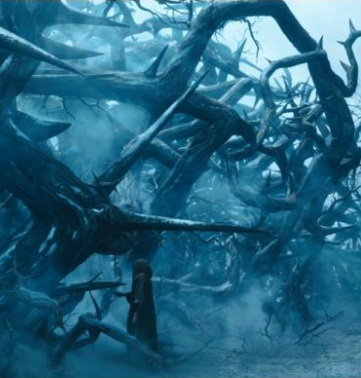
The mangroves entrance reminded me of the thorny forest in Sleeping Beauty. 
Picture
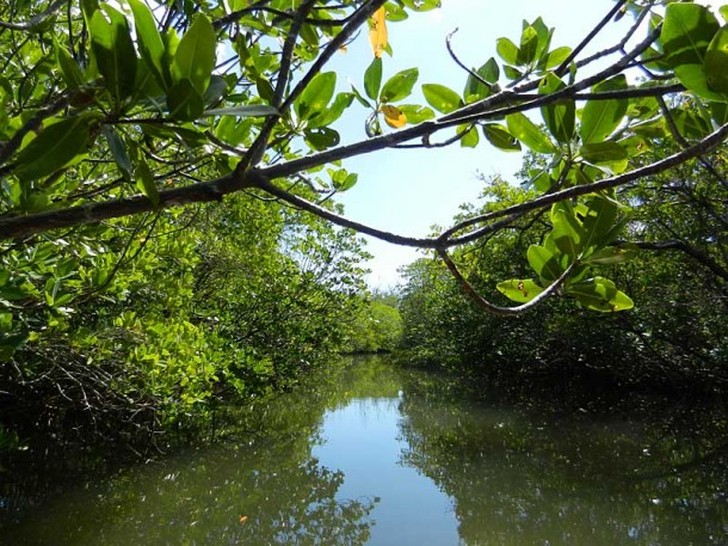
This is what the mangroves looked like, although this isn't my photo. Credit floridarambler.com. Sometimes I'd look up and not see the end of our path. It'd be easy to get lost in the maze, but thankfully we had an excellent guide. 
The video shows a 6 second snippet of our hour long boat ride to the mangroves. It couldn't have been a nicer, more sun-shinny day. 
Picture
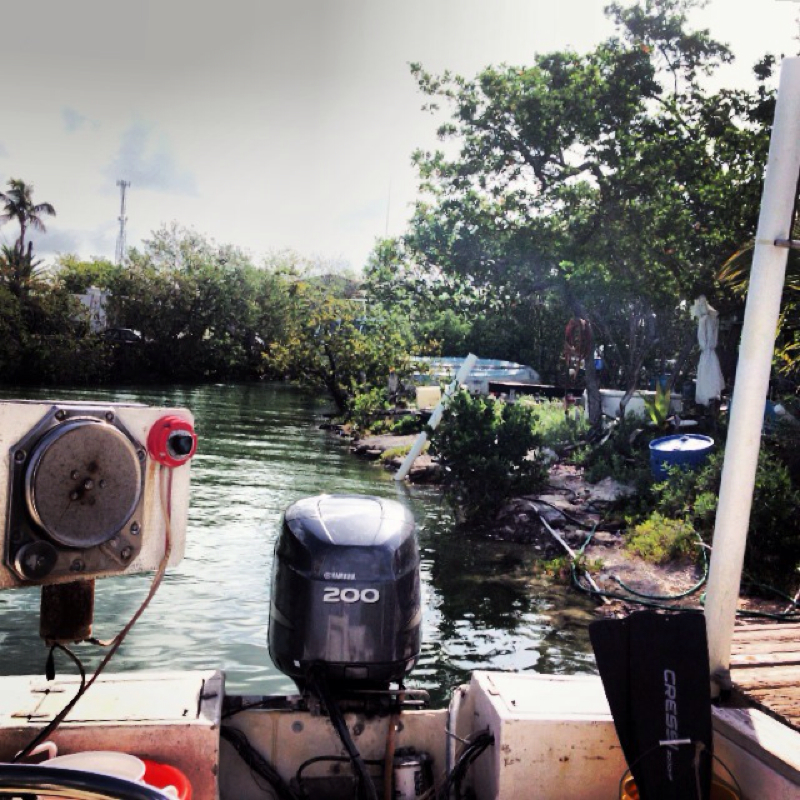
We went out in a small motor boat, perfect for maneuvering in the shallow water. 

Mangrove Update

Update: Our guide Don just sent me a copy of July's National Geographic with a terrific piece with amazing photos about the Goliath Grouper in the mangroves that they've been working on for years.  I'll write a separate post soon about his fascinating work and this interesting creature that can be up to 800 lbs and nine feet long!  (added 6/21/14)

A REASON TO SMILE: Thank You Notes

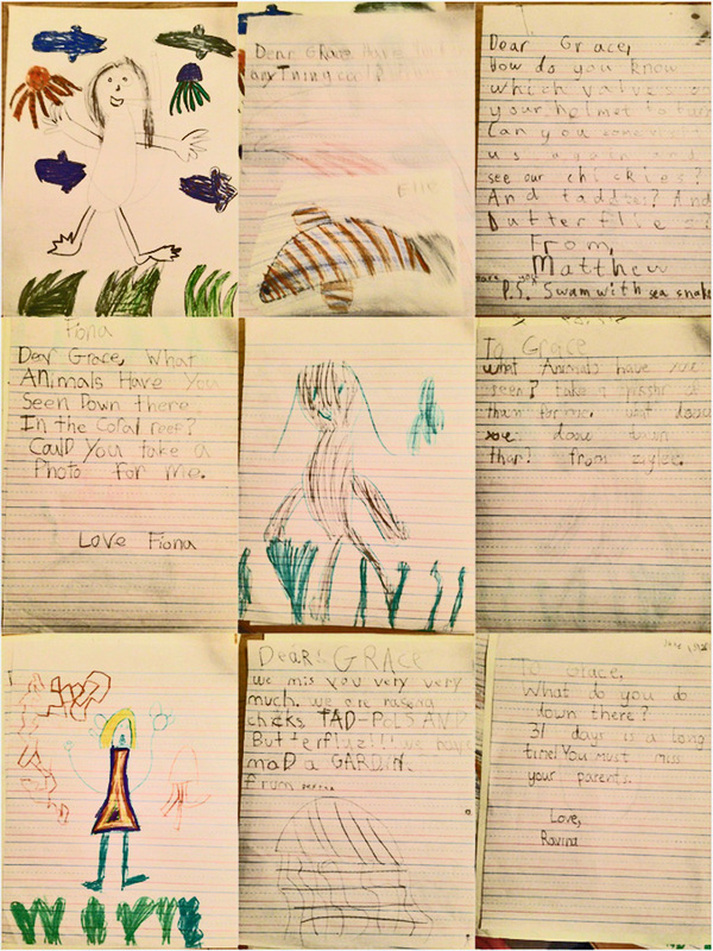
This afternoon I got a very pleasant surprise in the mail. The students at Birches, whom I chatted with last week, sent me many thank you notes. It put a huge smile on my face! The letters have more excellent questions too. Kids are so curious! Have you seen anything cool? Have you swam with sea snakes? What other animals have you seen? Will you send me a 'pikshr'?  My first visit with this school was in the fall, and it was great (blog post here). 
Picture
One thank you note asked, "Do you know which valves to turn on your helmet?" Another said, "Grace, We miss you very, very much!"

Some Work, Some fun

The past few days I've also been helping prepare science research, so everything is ready for our saturation on June 17th. The Northeastern surface team, who has a fantastic blog here, started shipping their gear last week, and it's slowly arriving at base. One of the things I was most excited to receive was the plankton traps from graduate student Amanda Dwyer. On our first day in Aquarius, fellow aquanaut Liz and I will deploy a dozen of the traps over different regions of the coral reef. All traps are small, so they are minimally invasive. They will collect zooplankton that rise into the net. Each day and night we'll then collect samples from the net, and Amanda will analyze the results. She'll be able to tell the health of the reef from the samples, and learn more about the zooplankton's nocturnal behavior. Plankton are an incredible resource on earth; they provide at least half of the oxygen we breath! I'm excited to help learn more about their important role in our ecosystem. 

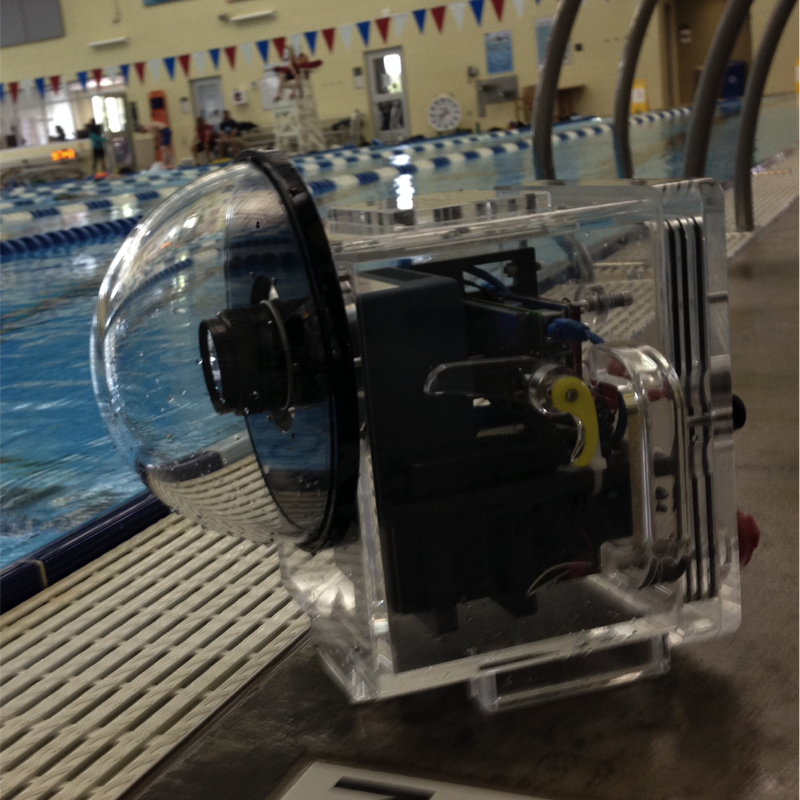
The tools for other research, including for the sponges DNA, coral-stress, and sponge metabolism studies, arrive this week as well. More on that to come! Other exciting news is that the underwater housing for the Edgertronic camera is on it's way here, thanks to the Sexton Corporation, who has amazingly designed, created, and tested a modular system for using the Edgertronic underwater. 
Picture
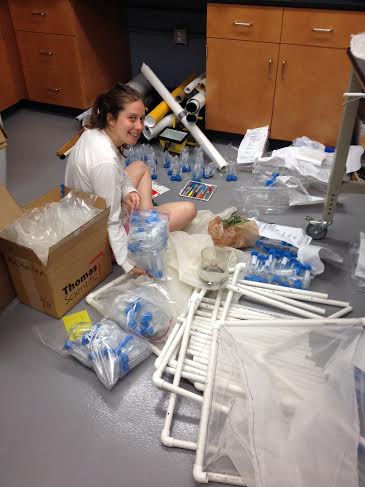
Graduate student Amanda designed and assembled plankton traps we'll use for her research during Mission 31.  She describes the process in her blog post. 
Picture
We tested her traps in the pool this week. They look good! We just need to add weight so they'll sink. The net and the jar at the top will collect plankton.
Picture
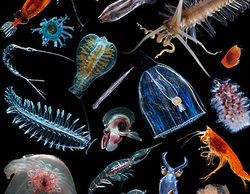
This is what zooplankton actually looks like. They're incredibly tiny animals, barely visible to the naked eye. See Amanda's blog post. 
Credit cmarz.org
Picture
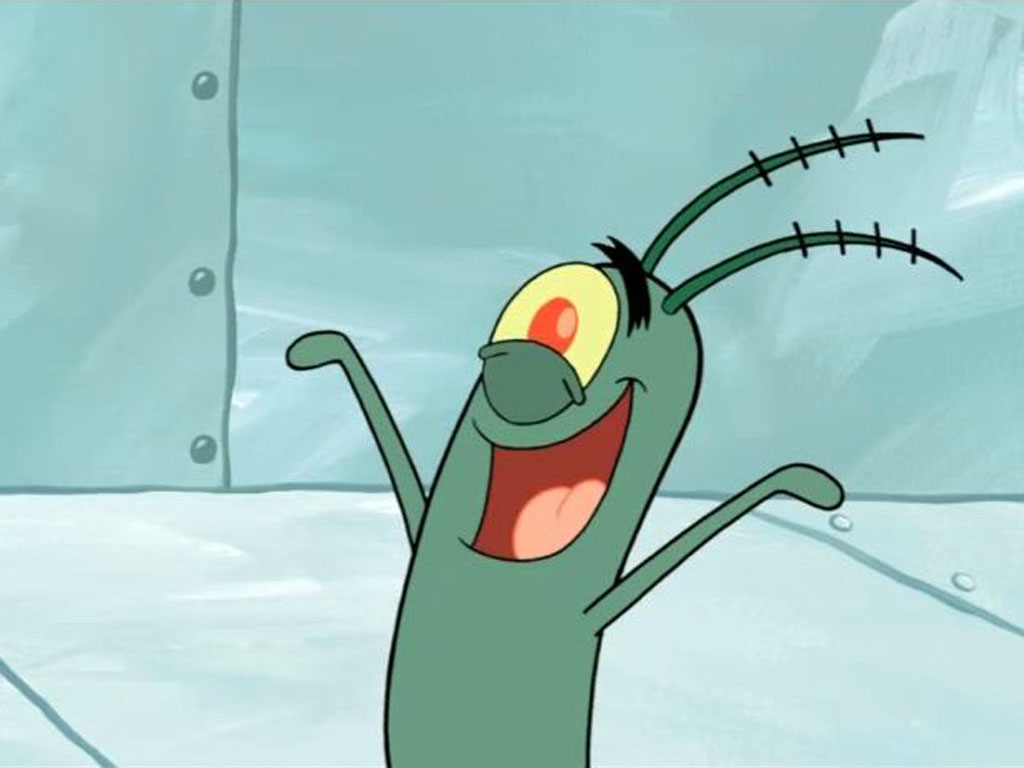
I still think of the plankton character in Spongebob whenever I think of plankton... Despite knowing more about plankton now than I ever did before.
Picture
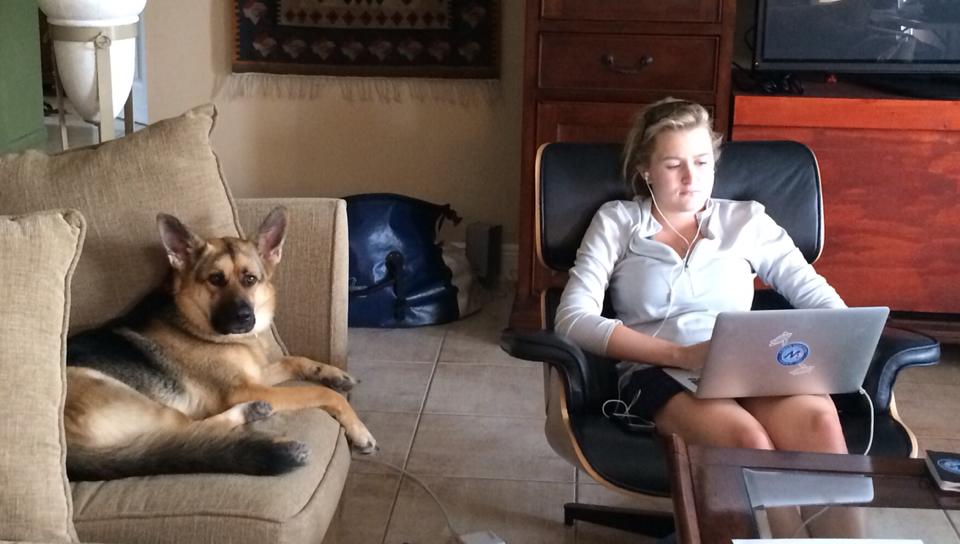
M31 team member Billy found mascot Samantha (follow her exciting Twitter account!) at a serious moment at mission headquarters, reading papers about plankton, sponges, and coral reefs to prepare for Mission 31 science. Someone said that the world would be a better place if more dogs had twitter accounts.
Picture
Friday night (+Friday the 13th!) full moon celebration on the beach, complete with fire dancers, fireworks, and a Latin-African fusion band. I tried taking a photo of the moon with my phone, but it just looked like a flashlight hanging in the sky.
Picture
Beautiful! Did an interview on the beach yesterday for Univision TV. Couldn't imagine a better back drop! The only issue was that we sometimes had to wait for a paddle boarder to pass in the background :)
Picture
Also beautiful! Credit to Jeremy Childress at the Sexton Corporation, who made this underwater housing for the Edgertronic. He also connected the Edgertronic to a battery and screen that will fit inside the housing. 

HAPPY BIRTHDAY JACQUES COUSTEAU!

6/11/2014

Comments


Where would Jacques want to celebrate?

 . . . the ocean! Pioneer explorer Jacques Yves Cousteau said, "The sea, once it casts its spell, holds one in its net of wonder forever." 

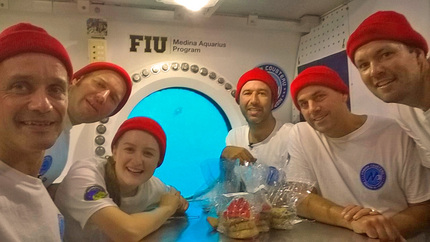
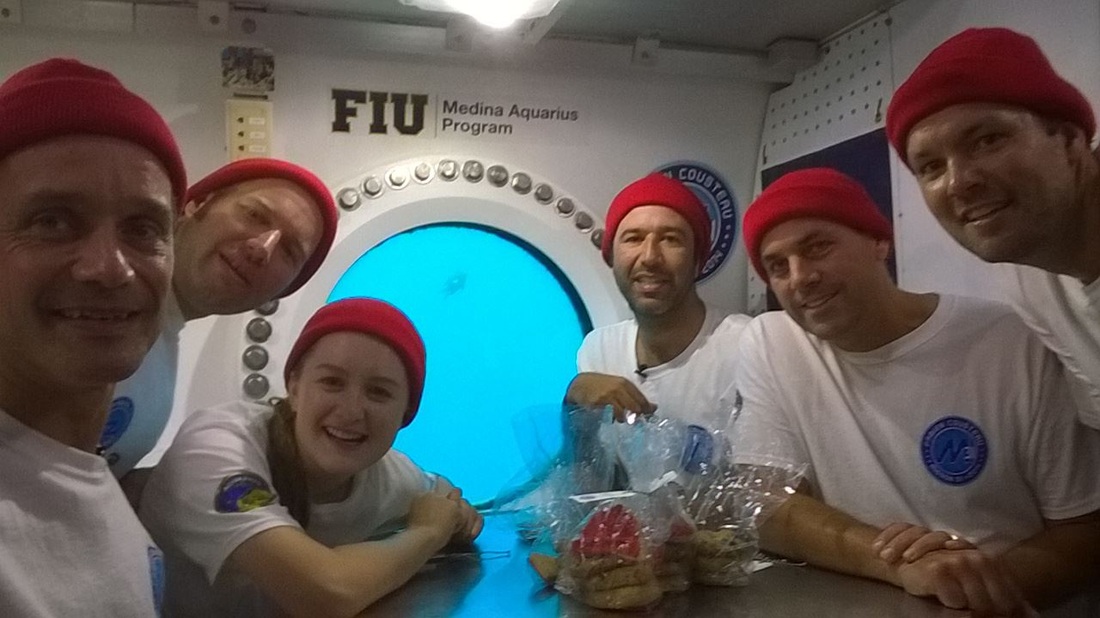
Today we celebrated under the sea in Aquarius what would have been Jacques' 104th birthday. In commemoration, we all wore red caps, like Jacques' team was known for. We also brought red cap-shaped cookies down to Aquarius, from our friends at Lucky 13 Bakery. 
"From birth, man carries the weight of gravity on his shoulders. He is bolted to earth. But man has only to sink beneath the surface and he is free."--Jacques Cousteau

"The sea, the great unifier, is man's only hope. Now, as never before, the old phrase has a literal meaning: we are all in the same boat." --Jacques Cousteau
Picture
A selfie by Fabien Cousteau in Aquarius. It's red cap time celebrating Jacques' birthday undersea! Notice the red cap-shaped cookies! Left to right: Fabien, Ryan, me, Marc, Kip, and Brian.
Picture
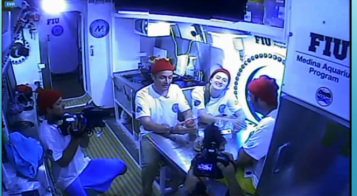
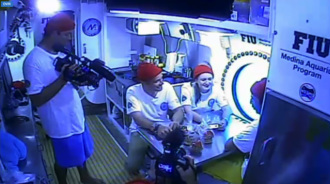
It was nice to chat in Aquarius with Fabien and Marc. Brian and Kip are filming us. Photo credit to Jan Donnelly for the screen capture from the live feed camera!
Picture
Fabien told us about his grandfather's 75th birthday, one of his most vivid childhood memories. His grandfather impressed upon him, but never forced, a love of nature and the ocean.
This was my first time at the Aquarius table! Until now, I'd only gone as far as the wet porch. It felt like home, as I've taken so many Skype-tours of the habitat, watched it for hours from the control desk, and studied every inch of it during training. Plus, it's such a small space that it doesn't take long to become well acquainted! 

My visit to Aquarius today was a surface dive only, so we could spend only 45 minutes maximum in the habitat due to decompression. Time flew by! It was great to chat with Fabien and Kip, and briefly with Andy and Adam as they headed out for research. They're none the worse for wear -- cheerful and extra grateful for the cookies (a welcome respite from the freeze dried food). See Andy's video diary about why they tend to eat "astronaut food," and see this video about how we can send food from land. There'll be a video about today coming out soon; stay tuned! 

AFTERNOON SCIENCE

This afternoon, the Mission 31 production team shot a short video about how colors change as divers go deeper underwater.  Photo credit to Mission 31/Nokia Lumia.
Picture
Notice how colors near the surface are brighter, and you can see the red!
Picture
The same colors 60ft underwater are duller, less warm, and no red!
Picture
People do normal things underwater! Here I'm checking the time on my M31 DOXA watch. This was a surface dive, so I could only stay 45 minutes at my depth due to decompression.
Picture
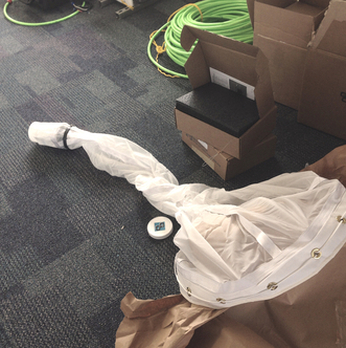
We also collected sensors for Northeastern's environmental contamination study. The sensors are powerful although they look vaguely like plastic bags floating on lines  (image credit Mission 31/Billy Snook). They will detect even tiny pollutants, including PCBs, PAHs, and potentially dispersants from the BP oil spill.

CONNECTING LAND AND SEA

Yikes!  We arrived back to base at 4:30pm, just when I was suppose to leave for a talk at Florida International University (FIU) in Miami. Cutting it close. I quickly changed and left just in time to make the event. Thank you Bob Howard from the MIT Club of South Florida for the ride!

On the drive to FIU, I really enjoyed Bob Howard's stories of MIT from the 1960s. He talked about working on punch-card computers, getting drafted for the war, and then working at the Pentagon. It's pretty crazy we ended up meeting in the Keys! 

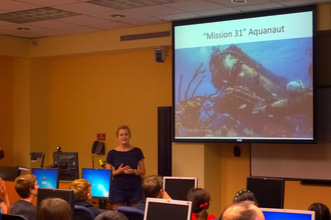
There was an impressive turn out for the talk. I was happy to see many young people in the audience; including a group from FIRST robotics, which brought back fond memories because FIRST introduced me to robotics as a high school student. Also attending were MIT Club of South Florida members, FIU students, and visiting coral reef scholars. The talk went well, despite experiencing every speaker's nightmare. My laptop crashed just before my talk without saving the last version of the presentation I'd prepared oh-so-carefully yesterday. Even though in my mind the slides weren't quite right, no one in the audience seemed to notice and everything went well. It was a good reminder to be prepared for the unexpected because things in life don't always go as planned. 

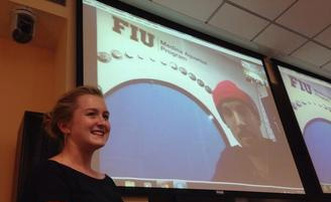
After introducing Mission 31 and Skyping with Andy in Aquarius, I spoke more broadly about ocean exploration. The audience was enthusiastic and asked many excellent questions, including details about aquanaut training and life underwater in the habitat. Others asked about my background in ballet and how I got started in robotics, which was through FIRST robotics, and how this organization influenced my career path! Thanks to Bob Howard, Gary Chin, and Aileen Soto for organizing the fantastic event! 
Picture
I talked about Mission 31, my time at MIT, my experience in FIRST robotics and, surprisingly, how my ballet training helped me as an engineer. Photo credit Bob Howard.
Picture
Andy Skyped with us from below the sea. He fielded a number of questions about what it's like to live there and his current research. Thanks Andy!
Picture
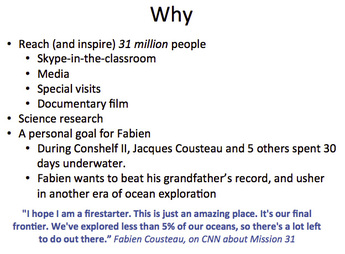
"Why Mission 31?" After explaining what we're doing on Mission 31, I figured people were either thinking, "Cool!" or "Why?!" Here's my answer (above) to the second question.
Picture
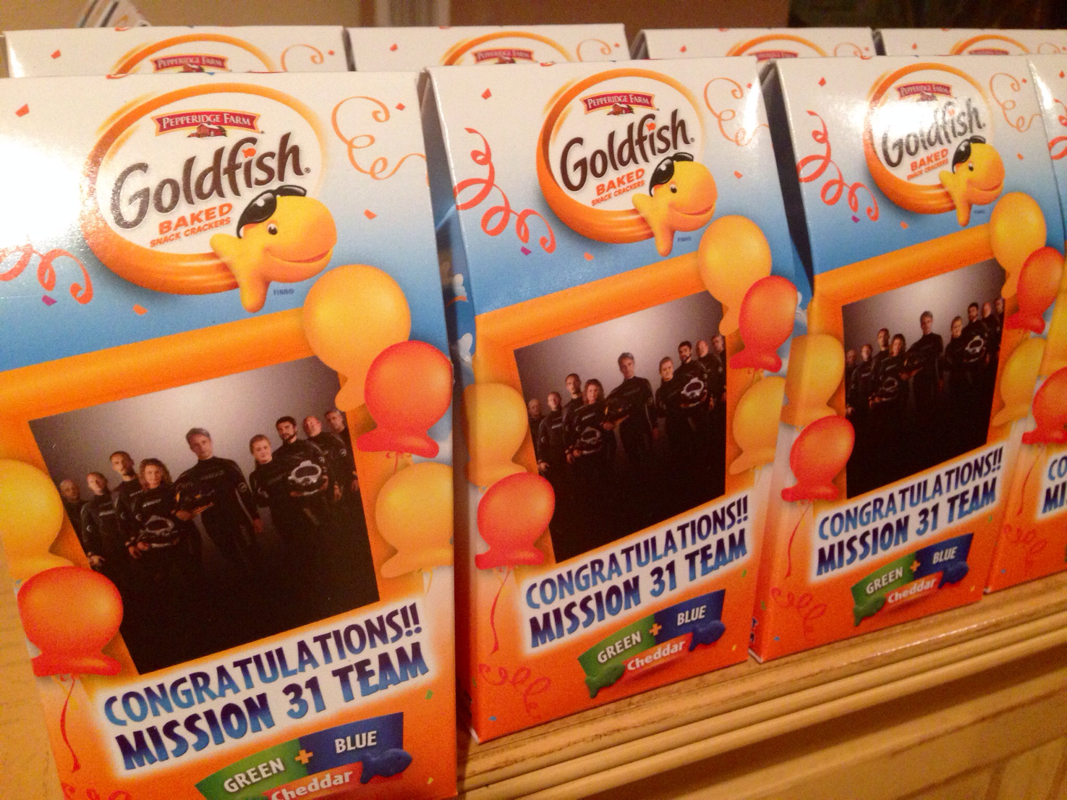
At the end of the day I found something special from one of our sponsors, Pepperidge Farm: Customized Goldfish!
Comments

WORLD OCEANS DAY WITH OCEAN SUPERSTARS

6/8/2014

 
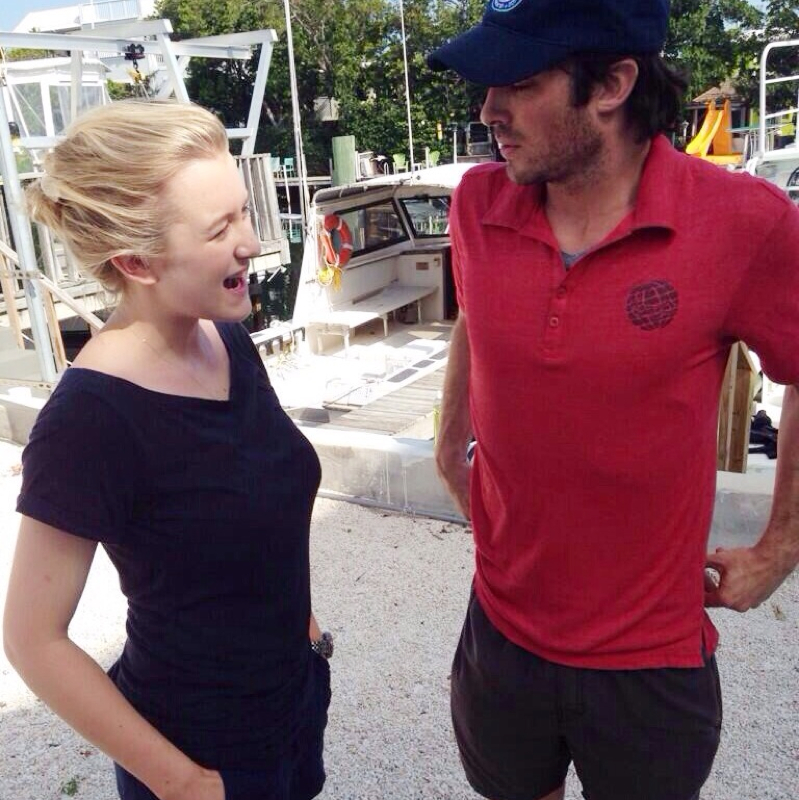
Happy World Oceans Day! Mission 31 and Aquarius, the only undersea research laboratory in the world, was the place to be for this year's celebration. Jean-Michel Cousteau and Dr. Sylvia Earle graced us with their presence, as well as Vampire-actor and conservationist Ian Somerhalder (his foundation) and former aquanaut Greg Stone (his TED talk). We celebrated with visits to the crew in Aquarius (Fabien, Adam, Andy, Otter, Kip and Ryan) and with a special event at Islamorada's History of Diving Museum.
Picture
Ian and I talked about Mission 31 research. With the Ian Somerhalder Foundation, he wants to help us save the oceans. We need more celebs like this! A tall order, I know...
Picture
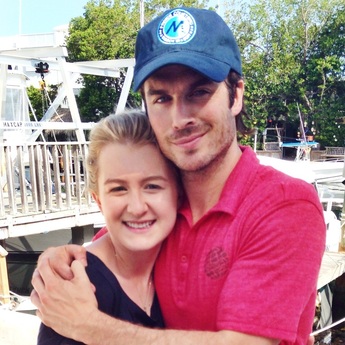
Awww... I got a hug from the vampire. I hoped we conveyed how extraordinary Mission 31 & ocean research are!
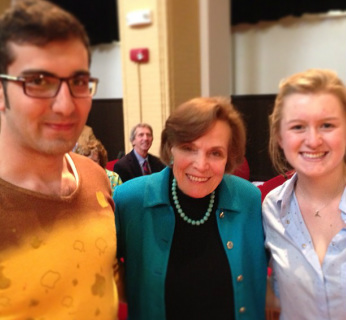
Picture
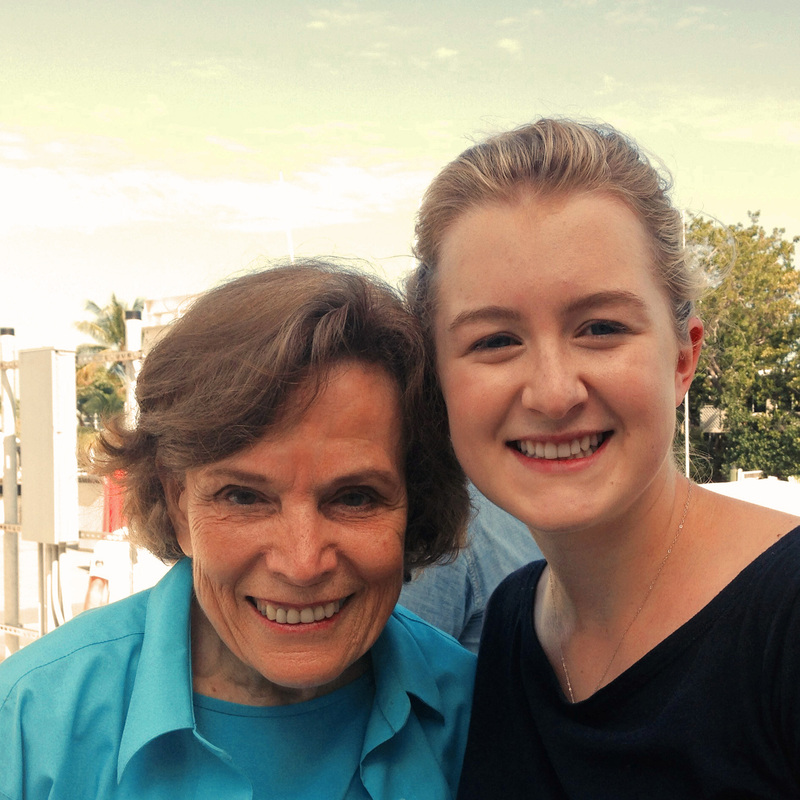
Such a pleasure to meet Dr. Earle! She's an inspiration.
Picture
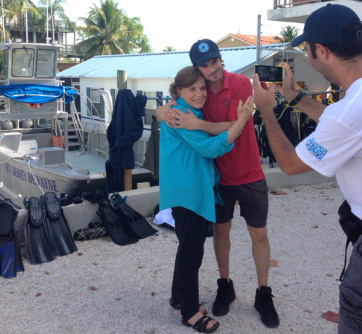
"Her deepness," Dr. Earle, getting a hug from Ian! He's a big fan of hers and quoted her in his interview today: "No blue, no green." M31 documentary film maker Marc Ostrick is on the right.
Picture
Flashback to last Spring 2013 meeting Sylvia in Boston, with my friend Hrant.
Picture
Ian gave the mission control desk a shout-out as soon as he entered the habitat. He knows how to work the camera! M31 film maker and aquanaut Kip, on the left, pointed out the security cam to the movie star.
Picture
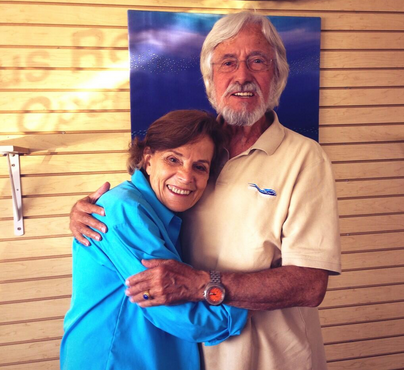
Sylvia and Jean-Michel! Ocean legends.
Picture
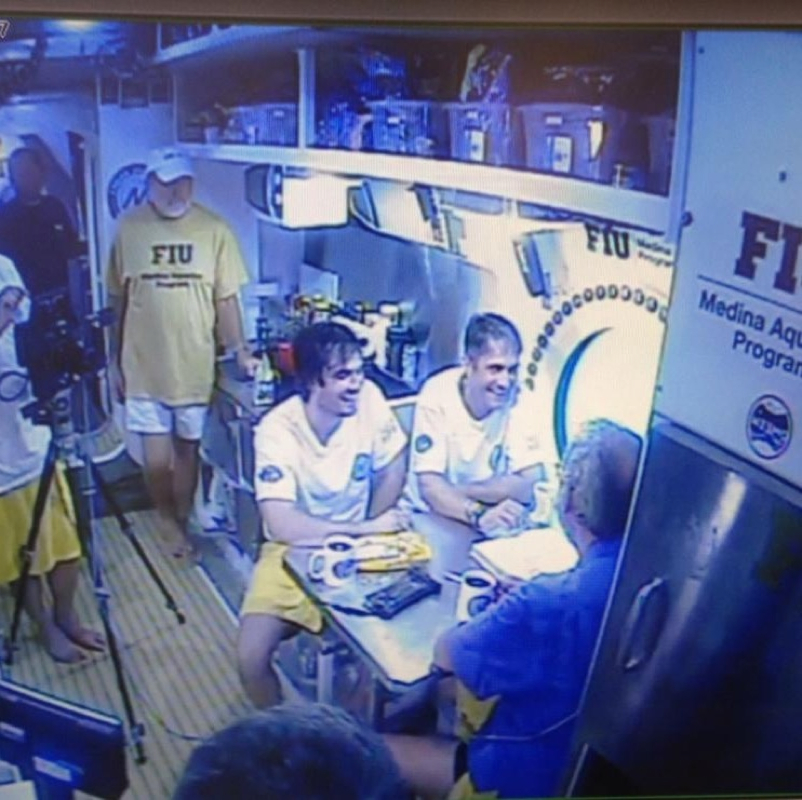
Ian and Fabien chatted for 45 minutes in Aquarius, the max you can stay without needing decompression. Across the table is former aquanaut Greg Stone. Standing in the back is Otter, the habitat technician who will stay below for the full 31 days! Fun fact: by the end of M31, Otter will have spent over 200 days underwater.
Picture
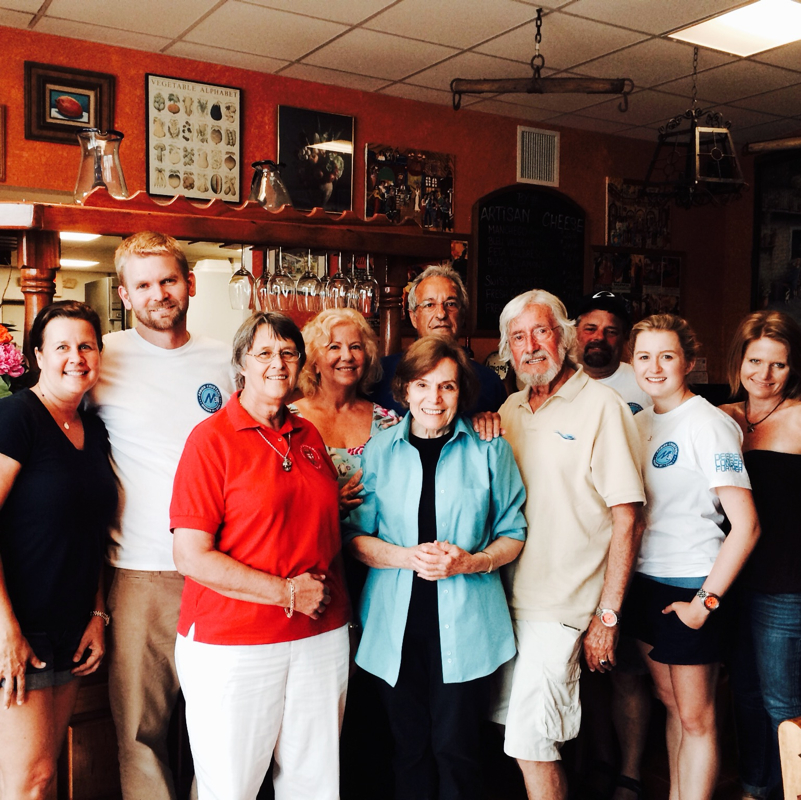
Who better to celebrate World Ocean's Day with?! From left to right: Audra Santoro (Aquarius Foundation director), Saul (M31 director), Sally (founder of the Diving Museum!), Spanish Garden's restaurant co-owner, Sylvia, Spanish Garden's restaurant co-owner, Jean-Michel, Billy Snook (M31 camera team), me, and Amy (M31 publicist).
Picture
In the afternoon I did an interview for hispanic television. I'll post when it's out! This is me with the show host, Nicolas Ibarguen.
Picture
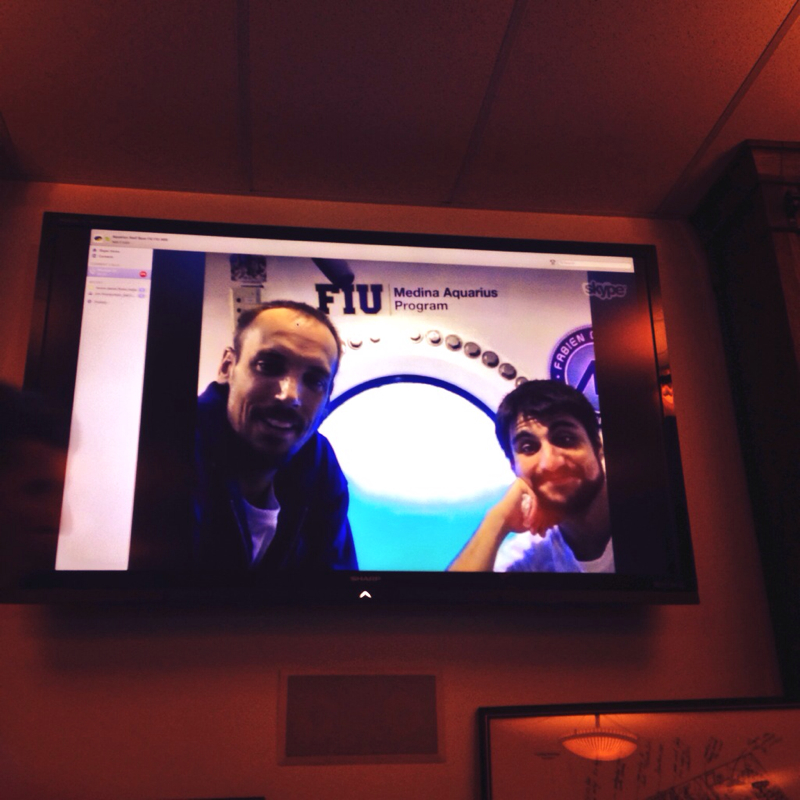
In the evening I had the pleasure of Skyping with Andy and Adam in Aquarius and helping them answer questions about Aquarius and Mission 31.
Picture
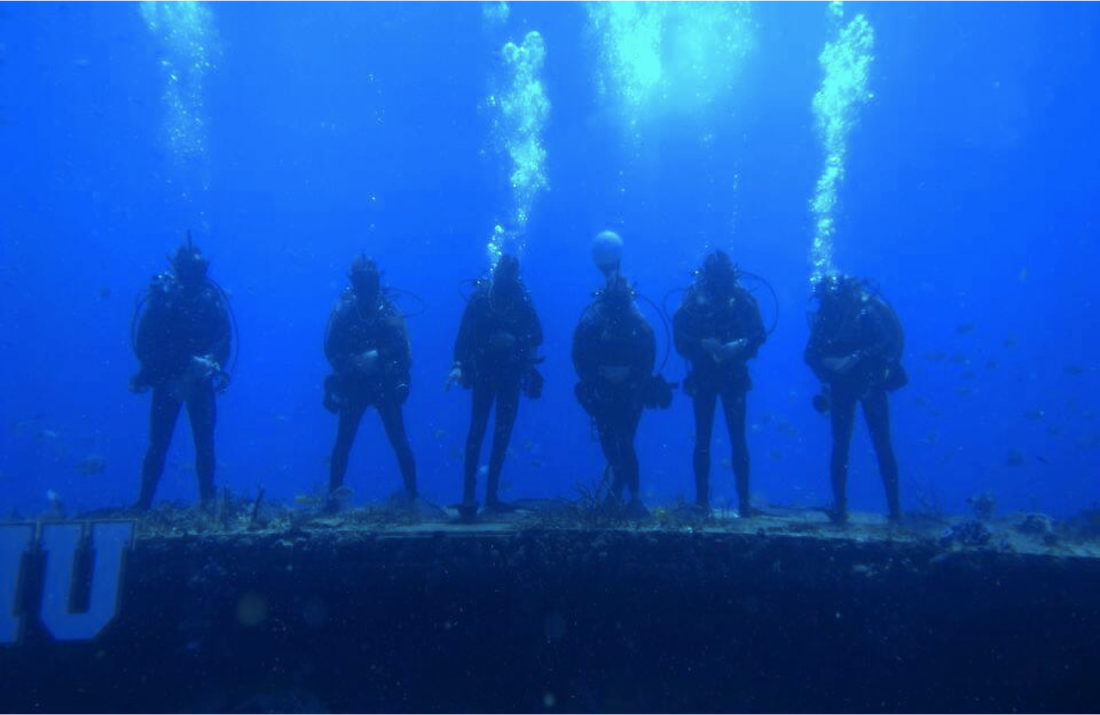
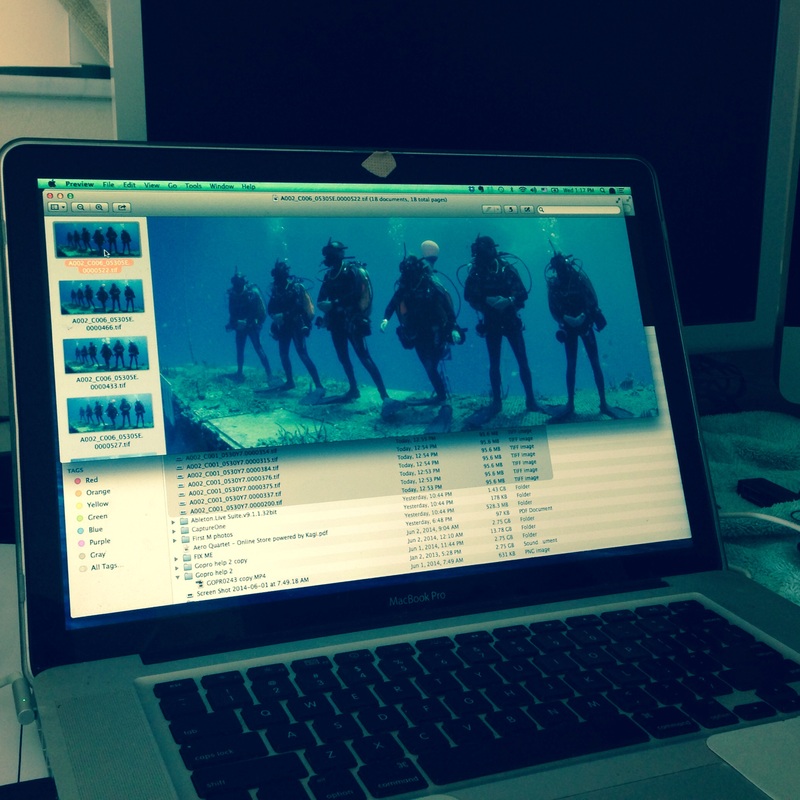
My World Oceans Day Promise is to engineer technology and help make policy to protect our oceans from climate change, pollution, and overfishing. This photo, just released by Mission 31, is from training. I'm surprised I can recognized everyone in their gear. From left to right, it's Kip, Fabien, Andy, Liz, Adam, and me.

MISSION 31, DAY 5: IN THE WATER AGAIN

6/5/2014

 
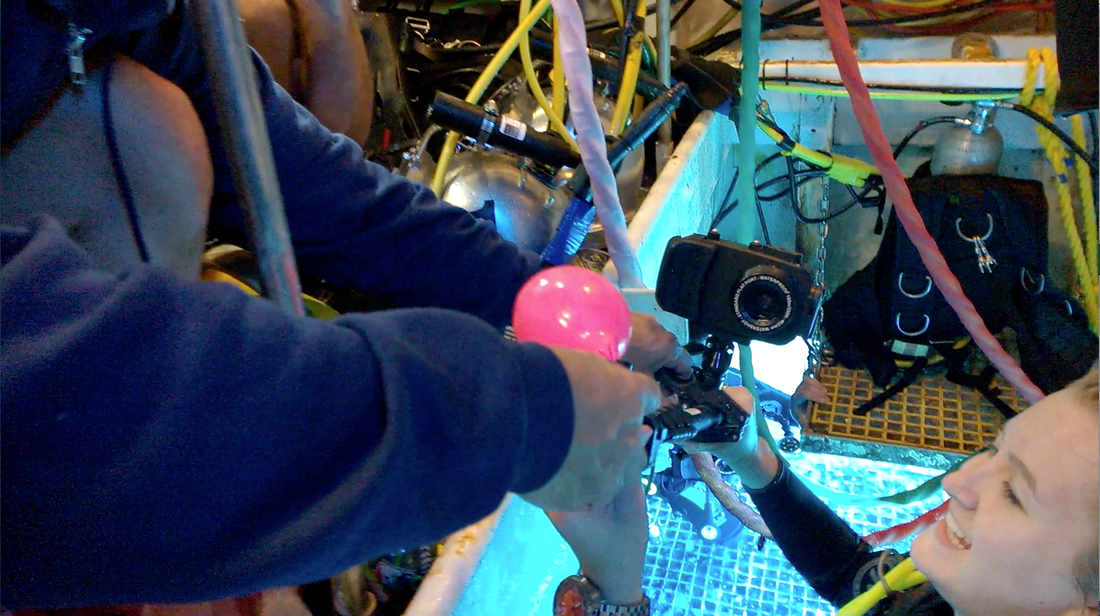
Today I was happily back in the water. Billy Snook, Tom, and I shot two short videos explaining basic "underwater" science concepts. The first video was about how colors change as you descend in the water column (reds become dark, blues look basically the same -- I'll miss the color red while living underwater!). For the second video, we took a balloon from Aquarius to the surface, showing how the differences in pressure will inflate the balloon. 
Picture
It was great to chat with Fabien, Kip, Andy, Adam, Otter and Ryan underwater! They were typically cheerful. Photo credit to Billy Snook/Mission 31, on a Nokia Lumia 1020.
Picture
Kip passed me a balloon from inside the habitat. I then swam the balloon to the surface, showing how pressure affects volume. Photo credit to Fabien Cousteau/Mission 31, on a Nokia Lumia 1020.

REVISITING THE BIRCHES SCHOOL

Picture
On the boat this afternoon, I was delighted to reconnect via Skype with the Birches Elementary students (kindergarden through 3rd grade) about Mission 31. I met the Lincoln, MA, students last fall and explained what it's like to be an aquanaut (blog post about that). They asked so many excellent questions! Today they asked me when I'll start living underwater (June 17th!) and what training was like. I was impressed they'd seen all of Mission 31's YouTube videos and, of course, had more excellent questions, such as: 
 
  • What is the red button for?
  • What would happen if you pressed the red button when you weren't supposed to? 
  • What if your tank cracked? 
  • What if there is a cyclone? 
  • Have you seen a shark yet?
  • What animals have you seen?
  • What do you eat? 
  • How does food get there?
The also asked if I had been bitten or stung by a jellyfish, and the answer is yes! (stung, that is; you can't really get bitten by a jelly). One of the Navy divers on our boat shared an exciting story of a jellyfish attack that certainly peaked their interest.

MEET THE OTHER AQUANAUTS

The production team, including Marc and Toby, edited these video diaries from the aquanauts currently down below. In addition to the three profiled below, Fabien and two technicians, Otter and Ryan, make up the present Aquarius crew. 
Adam
Andy
Kip
Tomorrow is a big day for me. I'll graduate from MIT! Since I didn't graduate from high school, this will be my first graduation. Even though I won't make the commencement ceremony in person, I'll be following the live feed, flip the "brass rat" with the rest of my classmates, and have a mini-celebration here in the Keys. 

MISSION 31, DAY 4:  A MAGICAL PLACE

6/4/2014

 
Picture
The ocean is such a magical place; yet 95% remains unexplored.

UNDERSEA RESEARCH

Aquanaut scientists Adam and Andy are currently doing undersea research for the first part of the mission, and Liz and I will switch with them on June 17.  To follow along with the undersea research, there's information on the Mission-31 website, video channel, and aquanaut scientist Adam Zenone's blog Zen1 for 31.The Northeastern team is also keeping a topside M31 science blog at View from the Surface.
Picture
Throwback Thursday! Andy, Adam, and I holding the three large grouper decoys. Real Goliath Grouper are several feet long and hundreds of pounds.

IF YOU FIND THIS ... 

Every morning at 5:30 a.m., Adam and Andy set-up the Goliath Grouper decoys (in the photo above) before the real grouper (and rest of us!) awake. Adam's blog post describes about how one got away! 

Adam was forced to simply watch as one large grouper decoys slowly slipped upward after it crossed his dive "ceiling" -- the height he cannot pass due to saturation. I can only imagine being so close, but unable to swim after it. Adam describes more details about the research he and Andy are conducting in his blog, including why he's chatting and collaborating with Norway about research while underwater!  Please keep a lookout for the grouper decoy and become a part of M31 research!

Picture
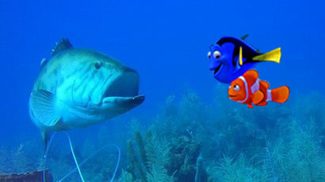
Finding Grouper. If you see a large grouper decoy that looks like one on left, it's Adam and Andy's! One of the three decoys got away. Adam cleverly suggested a new ocean current study. As Dori said in Finding Grouper, "When life gets you down, just keep on swimming."

GIGABYTES OF OCEAN RESEARCH

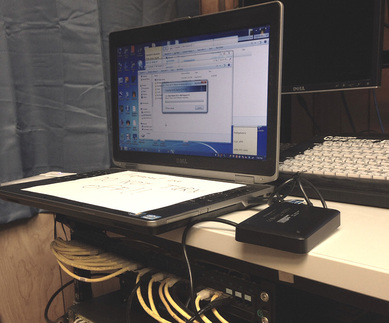
Every two days, Adam and Andy generate 800 gigabytes of undersea research data; that's a lot of data (yea!). The prefix giga means 10 to the 9th power; so one gigabyte is 1,000,000,000 bytes. They only use solid state drives in the habitat even though spinning drives are cheaper because the pressure differences undersea squeeze the spinning drive too much. So, Adam and Andy pod their solid state hard drives to me from below , and I transfer the data to spinning drives. Keep the ocean data coming, guys!
Picture
Ocean research by the gigabyte! No camera filter can make this an attractive photo. I'm transferring data from solid state drives (that work undersea) to cheaper spinning drives.
Picture
Can you guess what Andy is doing in this photo? This was taken last night outside the habitat with a Nokia Lumia phone. To find out, watch the newest video on the Mission 31 YouTube channel!
Picture
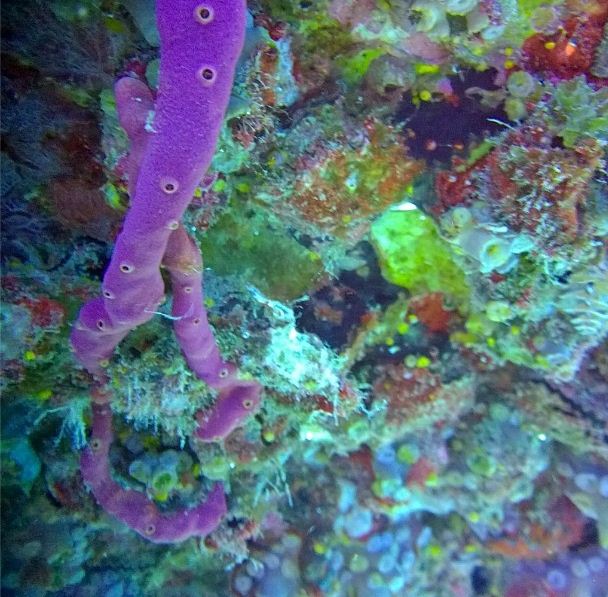
Adam shared this beautiful photo of the Key's coral reef on Instagram with caption, "It looks so alien." Credit to Adam Zenone, Nokia Lumia 1020.
Picture
More sneak peek footage. From left to right, here are Kip, Adam, Fabien, Liz, Andy and me standing on top of the Aquarius habitat.
Picture
At first glance, this photo probably doesn't make sense. It shows equipment (arrived today) for plankton studies. Divers will tow this net to capture plankton over areas of coral reef. I'll install a flow meter to record the net's speed. Northeastern graduate student Amanda will analyze the results for her thesis.

LET'S TALK ABOUT THE OCEAN

It's wonderful to see so many students and teachers excited about our oceans. There's lot's of outreach everyday via M31 Skype-in-the-Classroom and other sources. There's also a  Mission 31 curriculum for grades K-12 to bring back lessons "from the seafloor to the surface." 
Picture


LASTLY . . .

Picture
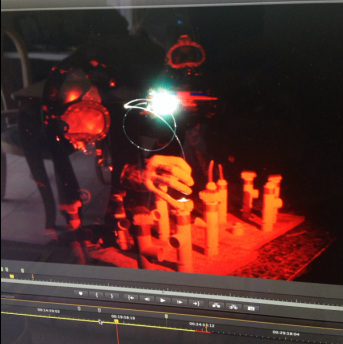
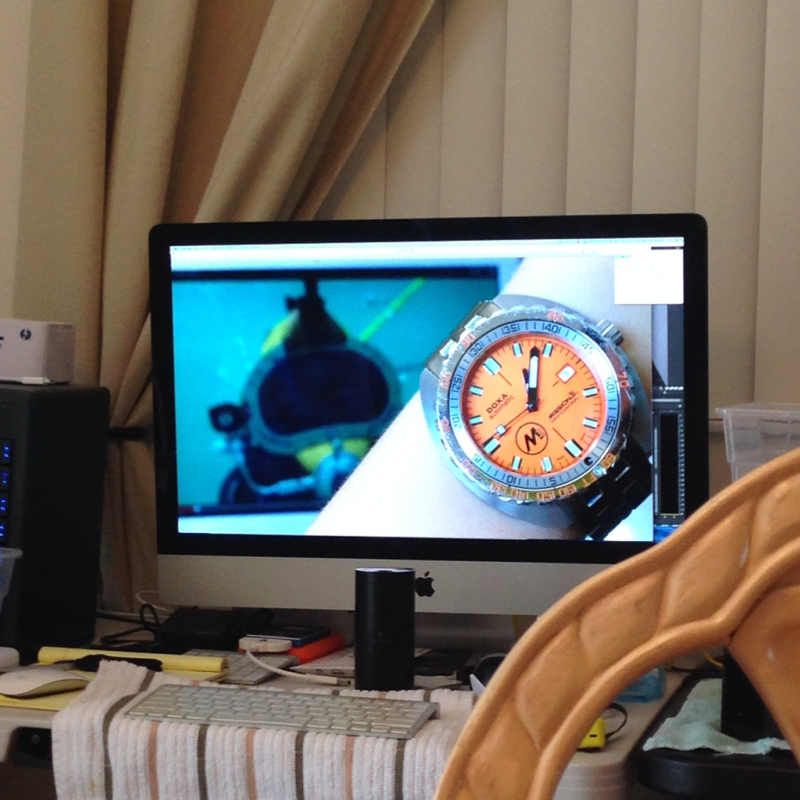
My watch made it to the big screen! Marc sneakily caught this shot of my watch as I was reviewing one of the M31 videos on YouTube. Credit Marc Ostrick.
Picture
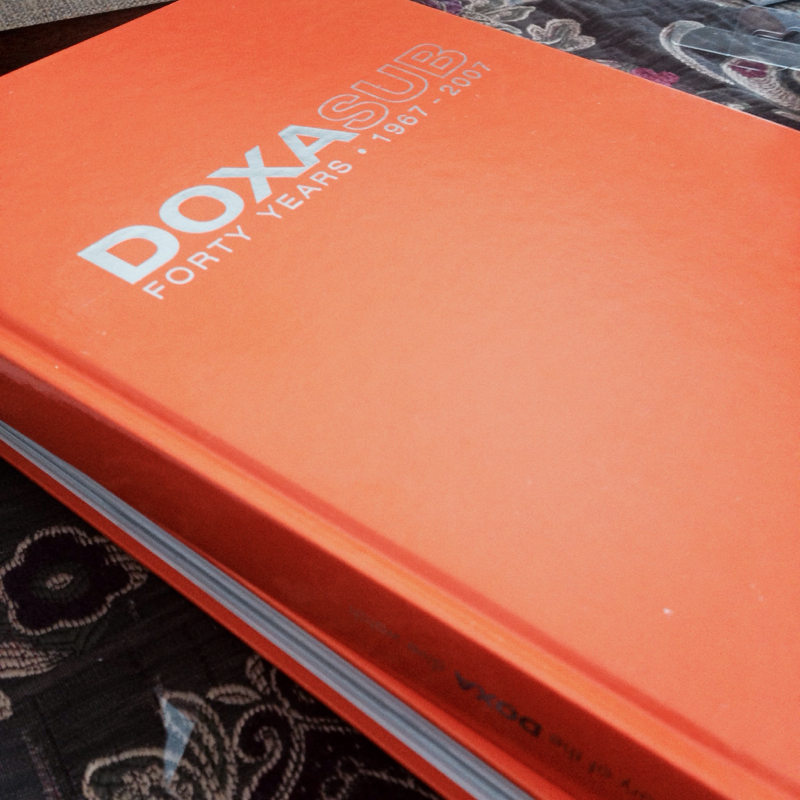
Some "light" reading arrived from our sponsor DOXA. These coffee table books describe the watches' rich history, starting with Jacques Cousteau.
Picture
More sneak peek footage. From left to right, here are Kip, Adam, Fabien, Liz, Andy and me standing on top of the Aquarius habitat.
Picture
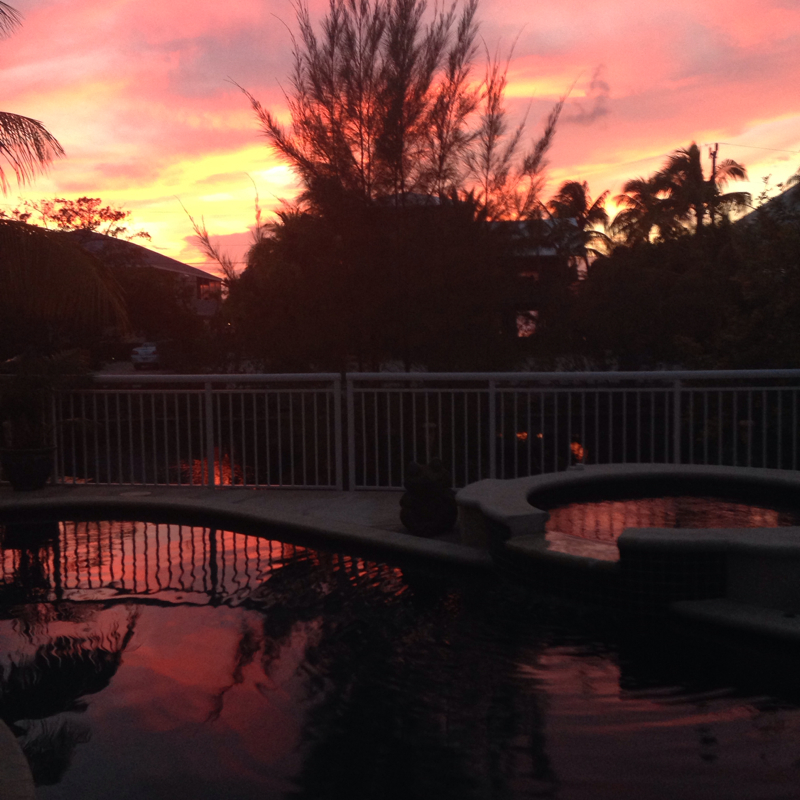
What a gorgeous end to the day! A pink sunset over the pool.

SURFACE DIVES TOMORROW!

I can't wait till tomorrow. I'm helping film 30-second science clips demonstrating basic physics concepts underwater. More on that later! For now, good night. 

MISSION 31, DAYS 1-3:  HABITAT WITH A VIEW

6/4/2014


MISSION 31 SCIENTISTS

The  Mission 31 aquanaut scientists will trade mid-way through the mission. Currently Adam and Andy are in the habitat with Fabien and camera crew. Liz and I will switch with them on June 17th. I can't wait! While topside, I'm supporting the crew in any way necessary, including prepping experiments, and helping with surface dives and outreach. 

Picture
Great run along the canal after prepping M31 experiments.
Picture
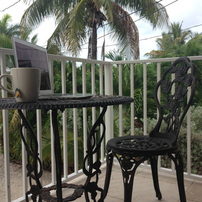
Found a nice spot to work with tea.

PREPPING RIGS FOR OCEAN RESEARCH

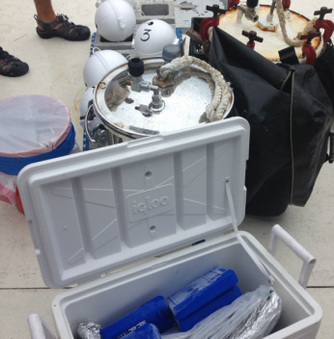
Topside I assembled cinder-block/float rigs for the environmental contamination study. In this research, we'll deploy and recover sensors that absorb and measure environmental contaminants, including PCBs, PAHs, and potentially even dispersants left from the BP oil spill.  (A Mission 31 science overview is in post 5/24/14.)  The rig set-up is basically a rope attached to a cinder block on one end, and a styrofoam sphere float on the other. The rope will carry sensors that look like thin clear film and must remain frozen until deployed. Early in the morning, I sent the prepared rigs (in a cooler) to the aquanauts to place on the reef. 
Picture
These are the prepped rigs and supplies I sent to Aquarius. The cooler contains the contamination sensors wrapped in foil. The foil and cold temperature keep the sensors free from other contaminants (that would mess up the study). The styrofoam spheres toward the back of the photo are the floats that pull the rope upward with the sensors.
Picture
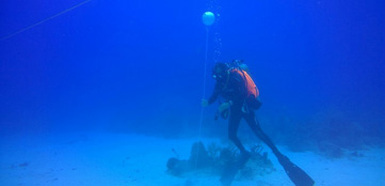
Andy setting the cinder-block/float rigs on the reef for the contamination study. See the white sphere float (at top) pulling the rope upward?
Picture
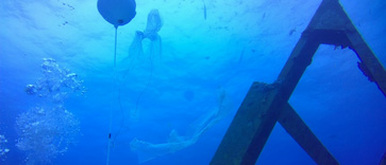
Look closely and you'll see in the center, suspended from rope, the thin plastic-like sensors to measure contaminants in the water. They're hard to see!
Brian Helmuth and his team of graduate researchers from the Marine Science Research Center at Northeastern University arrived from beautiful Nahant outside of Boston (see blog post 4/30/14) and started a topside blog called, "View From the Surface." I like what Brian says in the blog about Mission 31 connecting people with the ocean:  
"The science we will be doing on this Mission will be cutting edge . . . But what excites me most is that Mission 31 may start to rekindle that lost connection to the sea, so that some day my daughters can look back and say, 'Wow, humans really came close to messing things up. But somehow we found our connection to nature just in time to turn things around.'"  -- Brian Helmuth

HABITAT HAPPENINGS: IN THE SEA

Can you imagine this being the view out of your living room window? Fabien tweeted these images on Day 1. Aquarius is definitely a "room" with an amazing view.  
Picture
"Dusk" view from Aquarius window. @FCousteau
Picture
Night view from Aquarius window. @FCousteau.
For a summary of the undersea research, one of the aquanaut scientists currently saturated, Adam Zedone, is keeping a blog at Zen1 for 31 about his and Andy's work and adventures. I've enjoyed learning more about their coral, grouper, and predator/prey research. In this video, Adam not only shares details about their experiments, but he also tells of an extended 3-hour excursion in which he caught a "nap" on the seafloor in his Kirby Morgan dive helmet and swam with fish he got to "know" (that seems like an amazing experience, getting to "know" sea life in their natural environment). 
Picture
You snooze, you win! Adam took a "nap" on the seabed floor in his Kirby Morgan dive helmet during a 3 hr excursion. The video link is above!
Picture
These are the decoy grouper from the slashdown eve blog post. They're suspended here by rope for research. Read the story in Adam's blog, link above.
Picture
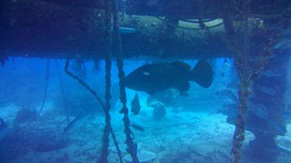
That's no decoy! It's a real Goliath Grouper approx 7 ft long and 300 lbs (larger than any aquanaut!) . Adam snapped this photo with more details in his blog!

HABITAT HAPPENINGS: INSIDE

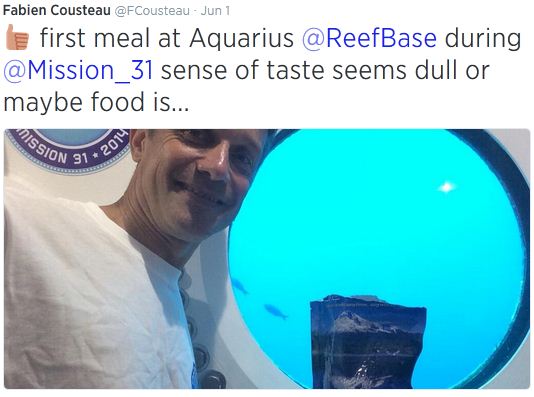
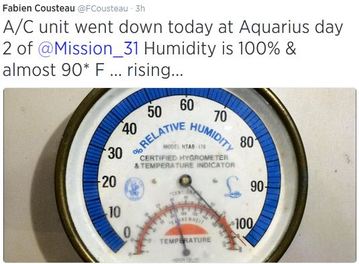
Aquarius' air conditioning broke for awhile, so the temperature and humidity soared to 90 degrees F and 100%, respectively in the habitat. According to Adam, It felt like a hot steamy sauna. Mission control, however, was able to fix it within the day. The habitat fare on Aquarius will be freeze dried food. Fabien tweeted that his "sense of taste seemed dull or maybe food is." Why freeze dried food undersea? Because a cooktop or oven flame would be very dangerous given the increased oxygen levels in the air at that pressure. Andy has a video about this titled, "Science and Dinner." Want to see what's going on in and around Aquarius? You can view the mission -- anytime 24/7 (even now!) -- via the live feed to the habitat on the Mission 31 website. Try it!
Picture
Freeze dried fare is the catch of the day (unless someone topside pods down "real" food!).
Picture
Climate change, and fast! Time for a swim? Mission Control thankfully fixed the AC within the same day.

SPECIAL GUESTS, LIVE FEED & LESSONS

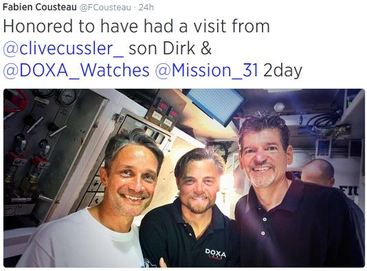
What attracted me most to Mission 31, In addition to the scientific research, was the possibility of exciting hope and passion in people of all ages about our oceans.  Students of all ages are Skyping daily with Mission 31 aquanauts to learn more about the ocean via M31 Skype-in-the-Classroom and various news outlets. In addition, almost every day we'll have VIP visitors who dive to the habitat and stay at the seafloor for about 45 minutes maximum to avoid having to decompress. One of the visitors that I helped topside, TV personality Katie Linendoll, wrote this CNN report from her visit.
Picture
Famous authors Clive Cussler and his son Dirk visit Aquarius.
Picture
Knocking on Aquarius' "office" window is Katie Linendoll, tech expert & TV commentator, who went down for a visit. They let her in!
Picture
Picture
Picture
"The idea is to spark the interest of a population of people who haven't previously gotten excited about the ocean—and to change the way they think about the planet." -- Fabien Cousteau

AQUANAUT TRAINING DAY 5: NAVY'S FASHION ADVICE

5/23/2014

 
Today we started promptly at "eight hundred," as the Navy divers say, and headed back to Aquarius with the Kirby Morgan diving helmets. It's our last of training day in the helmets, so we all should be very comfortable in them. The plan is to dive in pairs back to Aquarius for 30 minutes each. My goals today were to trim my weight just right so I'd be neutrally buoyant on the seafloor, practice climbing around the habitat underwater without flippers, get used to keeping my head back (with the heavy 30lbs helmet) underwater so I'm more balanced and air doesn't leak from the neck seal, and to be conscious of the umbilical cord so it doesn't get tangled or caught too often. I also need to remember to speak clearly in the communication device inside the helmet. Interestingly, the communications system filters out (to an extent) high-pitch background noises and sometimes Liz and my voices reach just that high-pitch frequency so they get cut off. It's not a major issue; if I don't hear a response I'll just repeat my message, but still it's something to be aware of. 
Picture
The empty dive vest and tank in the center is for the stand-by diver; every time we go on a training dive, a Navy diver sits there, ready to get in the water at any moment for an emergency. Heading to Aquarius on the boat, left to right: Carter (Navy diver), Adam (aquanaut), Liz (aquanaut), Andy (aquanaut), me (aquanaut), and Hunter (Navy diver). Photo credit to Fabien Cousteau.

Welcome "Back" to Aquarius 

Picture
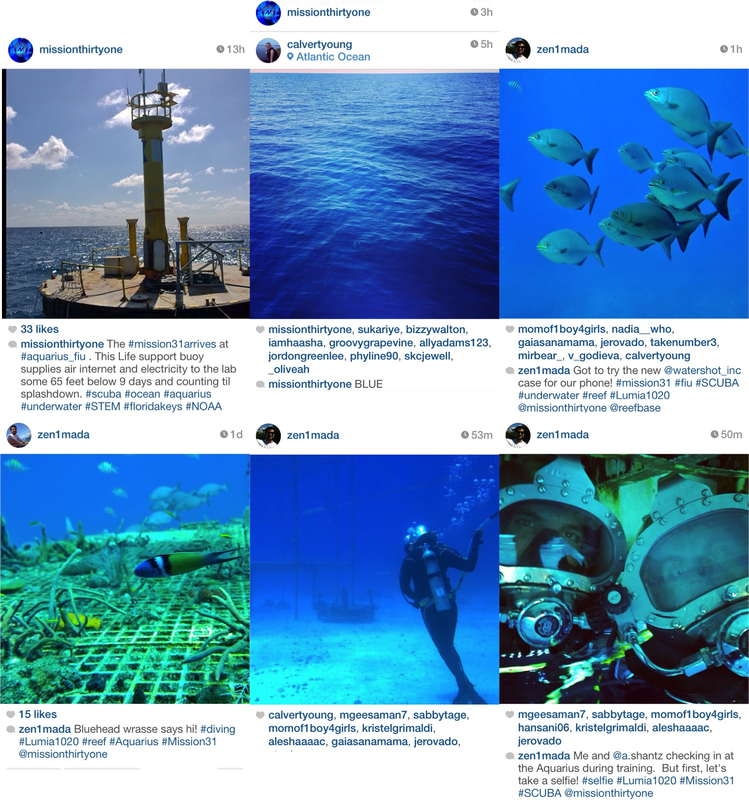
That buoy/power control tower floats directly above Aquarius, the underwater research habitat and marks the spot.
Picture
No filter! The water was just this clear and gorgeous. See those faint shimmery squiggles in the water? Those are barracuda.
I felt like a superhero being "weightless" underwater, jumping up and over the Aquarius habitat, which is like jumping over a two story building. I also took off my flippers and walked on the edge of the habitat like a tightrope walker. The Bonnet Rogue SCUBA divers caught my ballet "acrobatics" on video, but that footage won't come out until later! It turned out that I didn't need any added weight to reach neutral buoyancy on the seafloor. I also felt like I got the hang of swimming with the extra 30lbs on my head.  

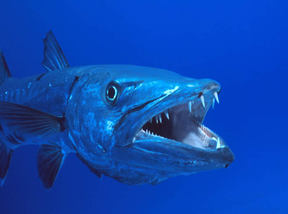
I stared eye-to-eye with a barracuda for what seemed like a few minutes. They are a fearsome-looking fish, known for their scary appearance and teeth, but getting scared is one of the worst things you can do underwater because you might hyperventilate, lose control of your buoyancy, etc. Besides, barracuda will only bite if you look/smell like a fish. With bubbles streaming out of my Kirby Morgan and a tank strapped to my back, I don't look like a fish. 
Picture
Instagram updates from the dive today. Beautiful!
Picture
The neck seal on the dive helmet is pulling on some of my (long) hair, so I need to be better braiding it out of the way. One of the Navy divers, however, recommended that I go for a 2 mm buzz cut ... that's not happening. I'm not ready to take fashion advice from the Navy.

Picture
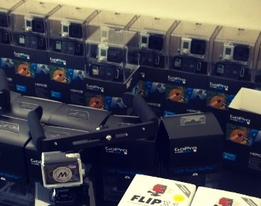
Mission31 custom GoPro kits from Backscatter. Photo credit Changing Tides Media.
Picture
Look at those teeth! A barracuda and I had a staring contest around Aquarius today.

Afternoon Outreach

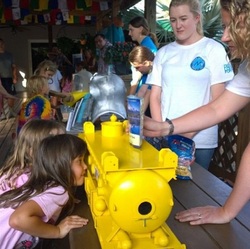
After training, Adam, Liz and I visited the local Montessori school's science night to tell them about Aquarius. We showed them the model of Aquarius with a LEGO aquanaut and let them try some freeze dried foods we'll be eating underwater (think astronaut food). It was so fun! Many of the kids were familiar with Aquarius because it's basically in their backyard. 
Picture
Students tasted freeze dried food that we'll eat in the underwater habitat.
Picture
Friday science outreach. LEGO auquanaut on the Aquarius model.
Picture
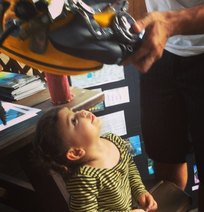
This lucky girl got to try on a dive helmet with Adam at the outreach event today. Aww...

A Good End to the Week 

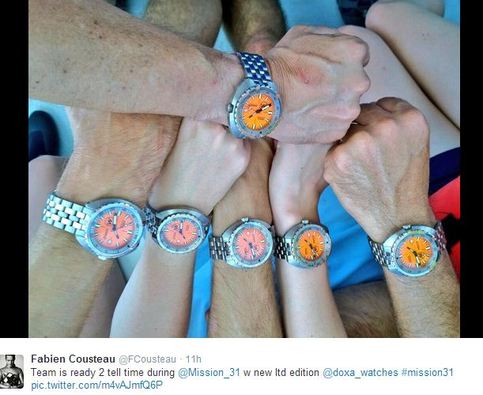
Before dinner with the crew this evening, we took a group photo with all the aquanauts, wearing our new gear from Oceanic. Also, Fabien brought us together for a surprise gift... He loaned us each limited edition Mission 31 DOXA watches! 
Picture
Orange is the new black. Doxa limited edition Mission 31 dive watches.
Next week is the final week of training. We'll focus on SCUBA and the details of Aquarius, and a Navy doctor will pull each of us aside for a final check to make sure we are fit for saturation. Safety is of paramount importance, so it's still possible any of us could fail the final check and not be allowed to saturate. Astronaut Ken Mattingly learned 3 days before Apollo 13's launch that he would not go because he was exposed to measles. If any of us for any reason is no longer able to saturate we could still aid the operation and research from topside, and even SCUBA dive down like other support divers. 

Saturday we'll be up early to review Mission 31 science research plans! 

INSPIRING HIGH SCHOOL Students ABOUT MARINE ROBOTICS

4/24/2014

 
I spoke at STEMspiration today to a group of high school students in D.C. So honored to be part of a great line up of speakers: 
Picture
Picture
From the STEMspiration site: 
STEMspiration is the first STEM (Science, Technology, Engineering, and Mathematics) conference of its kind - a completely student-led event bringing together leaders, doers, makers and thinkers of the highest caliber. STEMspiration has been crafted by the USASEF Youth Advisors as an independent initiative to promote powerful ideas and collaboration in the STEM world.

Who is STEMspiration for, you might ask? Frankly, it is for anyone who cares deeply about the future of science in our society, and how we will encourage rising generations to fearlessly jump into the fray of innovation and discovery. Students, teachers, policy makers, non-profits, inventors, academics, and anyone else will find a place at STEMspiration. While the event will be taking place at McKinley Tech High in Washington D.C., it will be live-streamed for easy access to anyone who has access to the internet.


The STEMspiration Speakers:
Keynote by U.S. Secretary of Education Arne Duncan Bill Drayton: Founder and CEO, Ashoka
Stephan Turnipseed: President Emeritus, LEGO Education
Adam Garry: Manager of Global Professional Learning, Dell
Joe Palca: Science correspondent, National Public Radio
Grace Young: Aquatic robot scientist, MIT
Jim Meeks: Board of Governors, Jefferson Awards
Steve Culbertson: CEO, Youth Service America
Kaya Henderson: Chancellor, Washington DC Public Schools
Picture
Ritankar Das: Founder of See Your Future, the youngest university medalist in Berkley history, Oxford MSc candidate for Bioengineering, and generally nice guy.
Jack Andraka: Winner of the International Science and Engineering Fair for work on a new detection tool for certain cancers, advocate for open access and pokemon master in the works.
Jonny Cohen: Inventor of Greenshield, Forbes 30 under 30 twice, Mechanical engineering student at Columbia, makes them busses work better.
Adora Svitak: Author at age 7, curator of TEDxRedmond, champion and advocate for world hunger, short-story connoisseur.
Omar Abudayyeh: Researcher, MD/PhD candidate at Harvard/MIT, entrepreneur and published scientist. He can see in cells what others cannot.
Sara Volz: Intel Science Talent Search grand winner, published researcher, created super-algae for alternative fuel from her bedroom, MIT student.
Param Jaggi: Founder of EcoViate to make green products widely effective and available, discovered effective algae bio-reactor at 14, looks pretty great in lab goggles.
Parker Liautaud: Explorer of the great Arctic and Antarctic, fighter for the environment, TIME magazine 30 under 30 list, he can get you to the North or South Pole, and he can get you home.
Erik Martin: Game Designer and education activist, works on games that help people and society, founder of The Edvengers Super Hero PAC, is a fire mage in his spare time.
Picture

PRE-K OCEAN STUDENTS

4/23/2014

 
Picture
One group of pre-kindergardeners at the Tobin School.
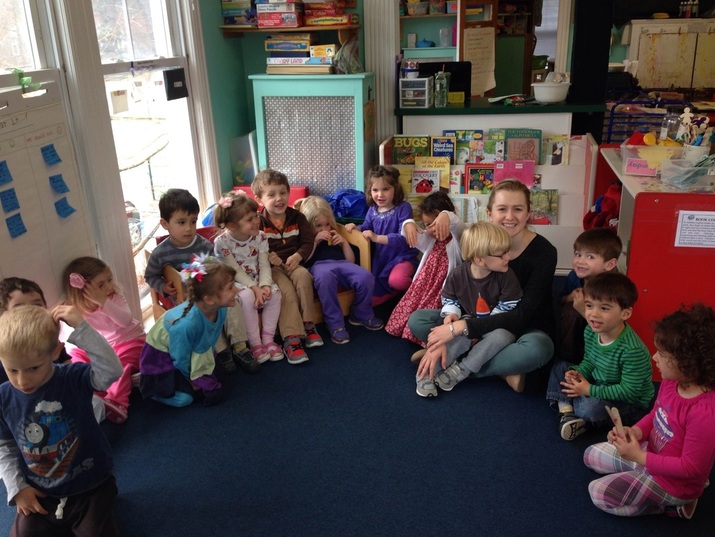
Kids are so fun. Today I talked with about 40 pre-kindergarten students (as young as 3 years old!) at the Tobin School about the ocean and living underwater. They were excited about everything, from Mission 31 to the fact that my necklace had a whale on it. Unlike the kindergarten through third grade students I talked with in the fall, pre-schoolers are a bit too young to understand the full concept of a question. They did, however, tell me tons of stories. One girl even told me she wanted to come on Mission 31 and be a SCUBA diver when she grows up. This made me happy!

I got a lot of "what if" questions, but mostly they told me stories about the water or swimming pools. I love their imaginations. They asked:
  • What would happen if you met a shark and made it angry? 
  • How do you get food? How do you get drinks?
  • What if a shark ate your food?
  • What if a shark visited you? 
  • How big is the house? Is it bigger than a T-rex?
  • If it was Easter underwater, would all the eggs float? 

And told me stories, such as: 
  • "I saw a pink fish once. It had eyes but it couldn't talk."
  • "I have a swimming pool." (. . . and then everyone talked about swimming pools.)
  • "I went to the ocean once with my mom." (. . . and then stories about going to the ocean.)
  • "I have a SCUBA diver bath toy." 
Cats SCUBA diving? One student asked if there would be cats underwater. I have no idea why they asked, and I answered no, we wouldn't have cats, but I thought of this video (left) of a SCUBA diving cat. It's hilarious. (Yes, someone put their cat in a tiny SCUBA suit. And it worked!) 

Preschool compliment!  I also received what's potentially the hugest complement you can get from a preschooler. One girl told me I looked like Elsa (a Disney princess, at right). She even asked if I was wearing Elsa's shoes. I was flattered.   
Picture

OCEAN ROBOTICS: SKYPE IN THE CLASSROOM

4/23/2014

Comments

 
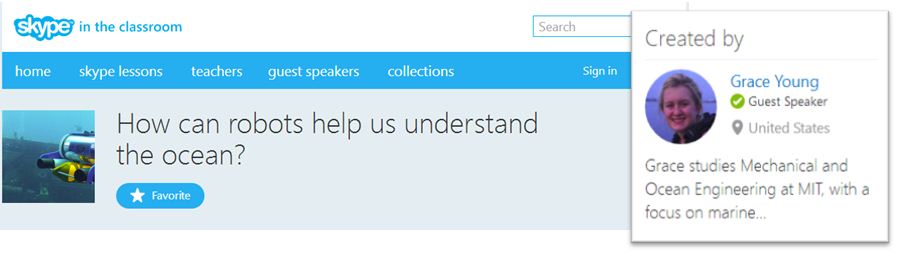
How Can Robots Help Us Understand the Ocean? I'm enjoying creating Skype in the Classroom lessons about the marine robotics and the ocean, and interacting with teachers and students. 
Picture
Comments

WHAT FLOAT'S & WHY? BOSTON SCIENCE CLUB FOR GIRLS

4/8/2014

 
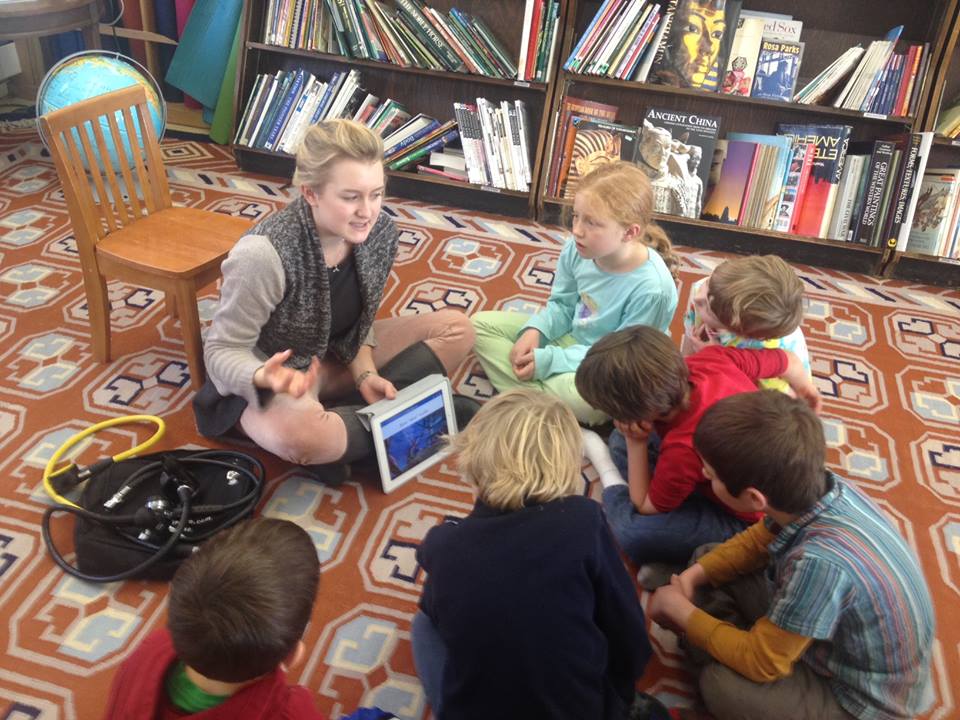
Today I talked about the ocean and living underwater with girls in the Boston Science Club for Girls at the Denver McCormick Middle School in Dorchester.   The Science Club for Girls is a terrific program with such a worthy goal.  The four instructors were incredibly patient and qualified; one had just come back from the Peace Corp and another had a degree in physics. After telling the girls about Aquarius, they did experiments with cans in water to help understand the concept of buoyancy. As they thought about air, buoyancy and fish, one girl brightly asked if fish fart! The surprising answer to this question actually won an Ig Nobel Prize, awards given just before the Nobel Prizes to scientific research that at first makes people laugh, and then think! Regarding buoyancy, did you know that a can of Diet Coke floats but a can of regular Coke sinks?  Try it!  (reason why is here).
Picture

ELEMENTARY OCEANS & LESSON PLAN FOR BUILDING AN UNDERWATER HABITAT

12/3/2013

 
Picture
Yesterday I spent four hours talking to K-3 students about the ocean, and showed them some robots I've worked on. Best question: "Can you turn this building into a cow?" 

They were so curious about everything, but spent most of the time saying hilarious things! Every 10 minutes or so someone would ask if I would get eaten by a shark, or I'd show them a piece of SCUBA gear, and they'd say, "What if a shark ate that?" I said sharks will really only eat you if you smell like blood and maybe look like a turtle. "You'd better not wear your ninja turtle costume under water!" one smartly said. I truly enjoyed my time with these students. 

More great questions from this group are posted here.

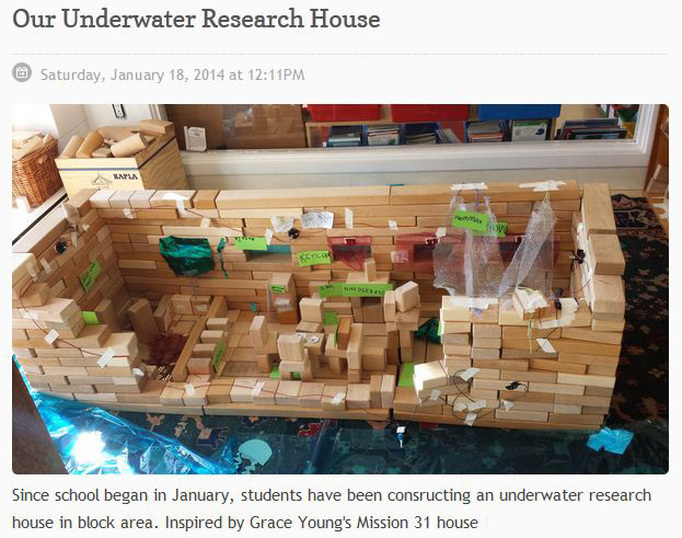
P.S. After my visit, these amazing students built an underwater research house, complete with electricity!  I want to go to school there!  A lesson plan from NOAA ocean education for building an underwater habitat is here: Aquarius Technology: Building an Underwater Habitat. Enjoy!

Picture
P.S.S. In June 2014, Mission 31 posted curriculum for grades K-12 to bring back lessons "from the seafloor to the surface," in addition to their M31 Skype-in-the-Classroom.

GREAT OCEAN QUESTIONS FROM KINDERGARTNERS

11/23/2013

 
Today a kindergarten teacher emailed me questions her students had about the ocean (see below . . . she has a curious bunch!). They are adorable, and asked all excellent questions. I'll chat with her students next week to tell them about the ocean and Mission 31. I can't wait to answer some, although I don't know the answers to them all! 

How do fires start under the ocean?
How do killer whales kill?
How do seals get away from killer whales?
How do fish swim? How do seals swim?
How do volcanoes erupt under water?
How does a squid get its tentacles?
How do octopus grow their legs back?
How does a squid squirt its black ink out?
How do boats float?
How do fire boats get water from the sea?
How do starfish get their eyes on their legs? (suction cups?)
How do starfish get their noses?
Do animals in the oceans have noses? Can they smell?
How do boats get made?
How do walruses get their tusks so long and how do they grow
out of their mouth?
How do fish live in the bottom of the ocean?
What lives in what parts of the ocean?
How does water float by itself?
How can Blue Whales hold their breath?
Are there undiscovered sea creatures?
What does it feel like to live in the ocean with gills and flippers?
How big are tiger sharks teeth?
How are coral reefs formed?
How do you know what the whales saying? How are they communicating?
How do fish communicate?
How do Blue Whales grow so big?
How do jellyfish get their tentacles?
How do they sting if they have no brain?
How do crabs eat?
Why are sharks' eyesight so bad?
Why aren't fish warm blooded?
How do crabs get out of their shells?
Why do sea turtles have bad eyesight?
Eyesight of underwater animals?
How can jellyfish swim?
What makes orcas good hunters?
Why do sharks like blood?
Why do orcas eat other whales?
Why are dolphins so friendly?
Why are porpoises so shy?
Why are some sea animals shy?
How did the ocean get salty?
Why is the pressure deep in the water so heavy?
How come the water is blue?
Why is the water dark in the deep sea?
How can animals live in intertidal zone?
Why is the ocean so deep?
How deep can the ocean get?
How did the water get there?
How are islands formed?
How does the ocean work?
How come the water you drink is clear but the water in the ocean is blue?
What makes the ocean clearer in some places than others?
How are waves formed?
Why does the ocean have waves?
How are low and high tides formed?
What causes slopes on beaches?
How come the sand texture changes?
Some beaches have lots more shells and rocks than others?
What percentage of our world is land?
How do animals that live in cold climates get fur and blubber?
How is an iceberg formed?
Is the ocean restless? Does it stop moving?
Why are there tsunamis in places like Japan?

Forward>>
    Picture

    Author

    Grace Young  (B.S., MIT, Ph.D, Oxford) is an ocean engineer, aquanaut, and explorer currently working at X. She lived underwater as a scientist and engineer on Fabian Cousteau’s Mission 31, and is a National Geographic Explorer. 

    Blog Highlights: 
    1. No Engineer is an Island
    2. Mission 31 Highlights
    3. Sailing Across the Atlantic 
    ​3. Return to CERN

    Tweets by @grace_h2o
    ​INSTAGRAM

    RSS Feed

    Categories

    All
    Arts & Science
    Conservation
    Coral Research Mission
    Edgertronic
    Marine Robotics
    Mission 31
    Mission 31 Training
    Ocean Reports & Facts
    Ocean & Space Science
    Outreach
    Research
    Sailing & Adventures
    Sea Creatures

Powered by Create your own unique website with customizable templates.